A parlay is the bet that fits on a screenshot: a handful of picks tied together for a payout big enough to share. The mechanics are simple and the appeal is obvious. The math underneath is where it gets honest.
What a parlay is
A parlay (or accumulator) combines two or more bets into one ticket. Every leg has to win, and the payouts multiply together instead of adding. That multiplication is why a few modest prices turn into one eye-catching number.
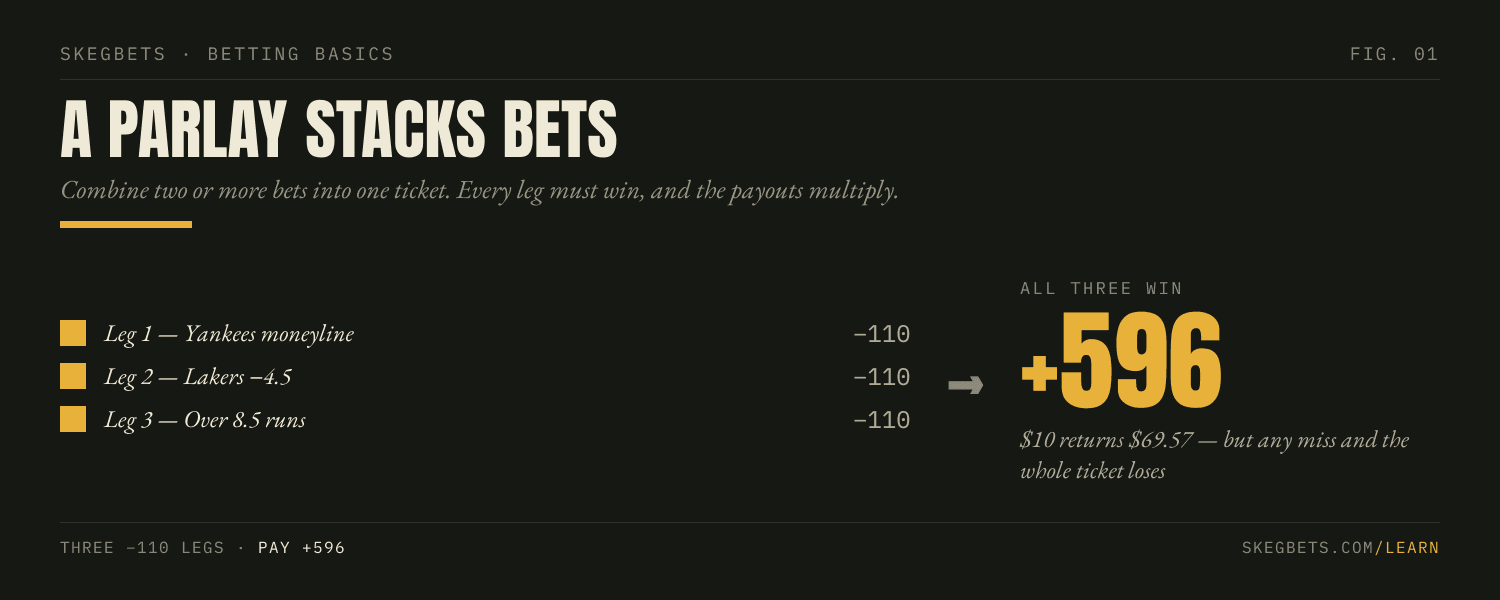
Three bets at −110 each, on their own, are unremarkable. Tie them into a parlay and the ticket pays about +596: a $10 stake returns $69.57. The trade is all-or-nothing. Hit all three and you collect; miss any one of them, even by a half-point, and the whole ticket loses. The parlay calculator works out the combined odds and payout for any set of legs.
Why the payout is shorter than it looks
Here’s the catch the big number hides. Every single leg already carries the book’s margin, the vig. When you parlay, you don’t pay that margin once, you pay it on every leg, and the cuts compound.
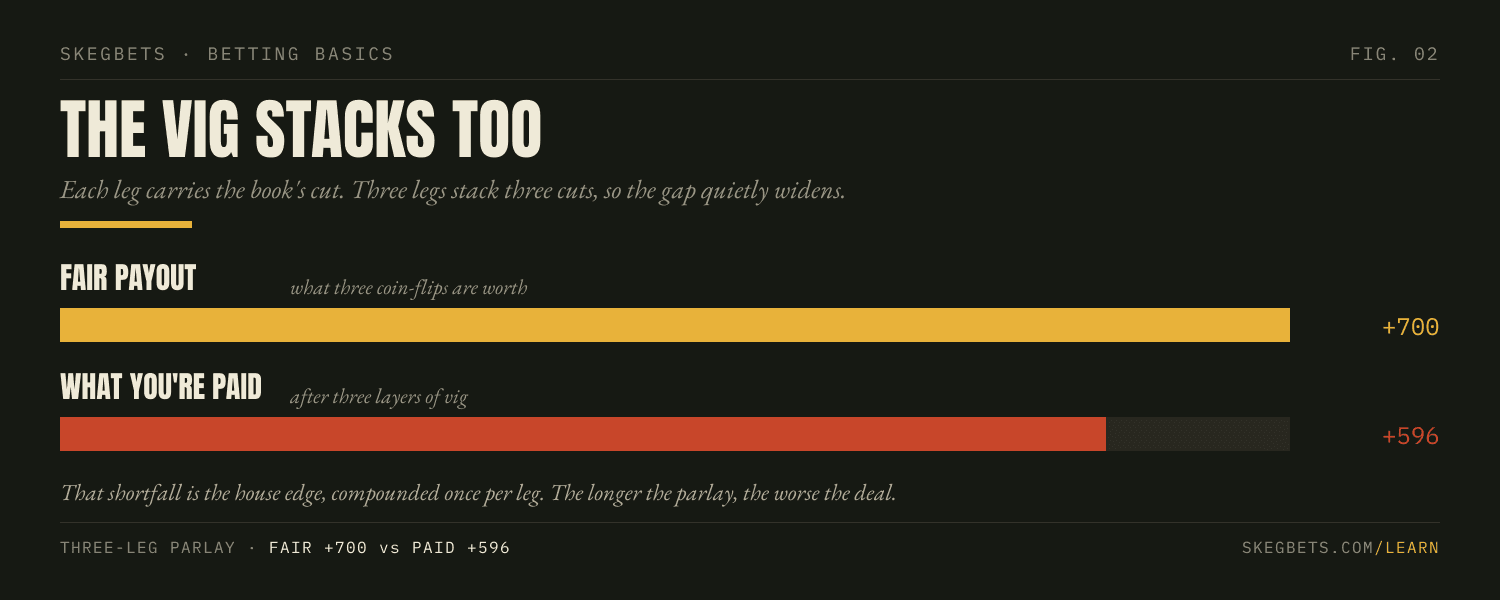
Three genuine coin flips should pay about +700. The book pays +596. That gap is the house edge, charged three times over instead of once. The more legs you add, the wider the gap between what a parlay is worth and what it pays, which is exactly why books promote them so heavily.
The hit rate falls fast
The other half of the trade is how rarely a parlay actually cashes. Each leg you add roughly halves your chance of winning the ticket.
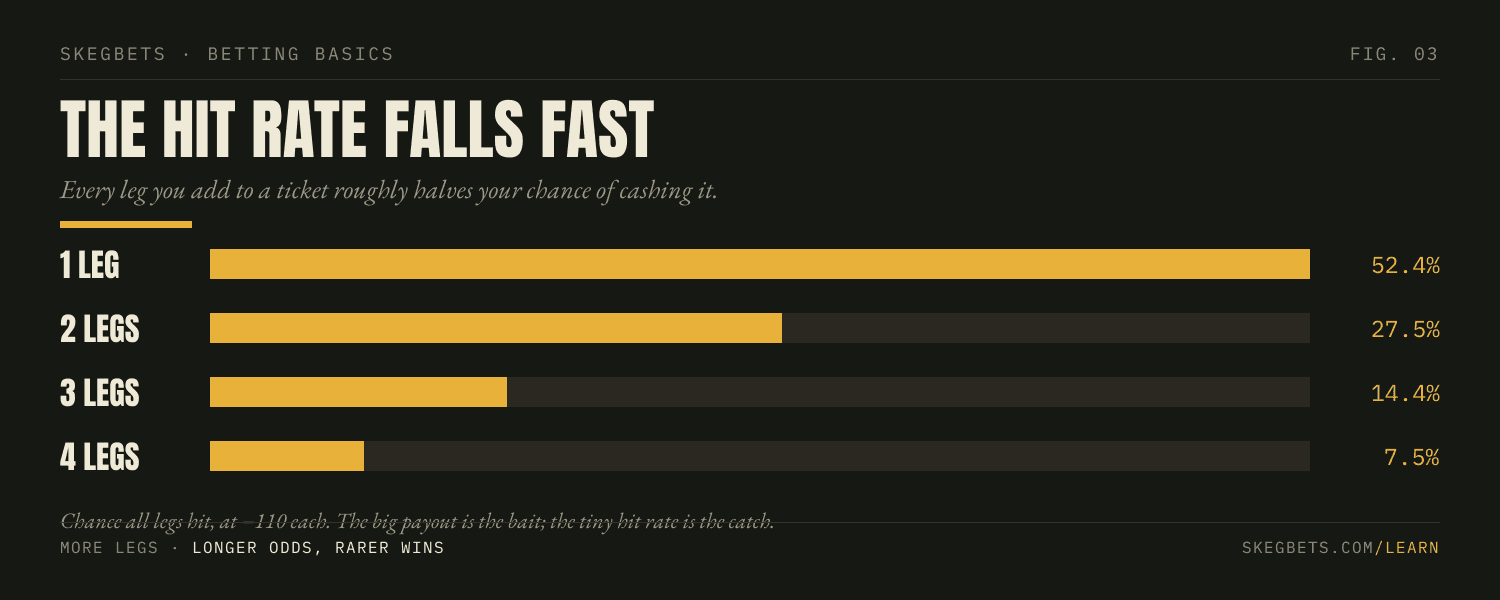
At −110 a leg, a single bet hits about 52% of the time, two legs about 27%, three about 14%, four about 7%. By five or six legs you’re deep into lottery-ticket territory: a thrilling payout attached to a chance that’s vanishingly small. The payout is the bait; the hit rate is the catch.
Are they ever worth it?
As a profit strategy, no. A multi-leg parlay carries a far bigger house edge than the same legs bet one at a time, so over any real sample it loses faster than straight bets. Where parlays make sense is as entertainment, at a tiny fraction of a unit, with eyes open about the price you’re paying for the fun.
The one nuance is correlation. If two legs tend to happen together, a quarterback throwing for a lot of yards and his team going over the total, a parlay can theoretically hold value, because the second leg is likelier once the first hits. Books know this, which is why same-game parlays are priced with extra adjustments and usually carry an even higher hold. Unless you’ve specifically found a correlation the book has underpriced, the straight bet is the better deal almost every time. A close cousin worth knowing is the teaser, a football parlay that buys points on every leg instead of taking the line as it is.
| Legs (−110 each) | Combined odds | Chance all hit |
|---|---|---|
| 2 legs | +264 | 27.5% |
| 3 legs | +596 | 14.4% |
| 4 legs | +1,228 | 7.5% |
| 5 legs | +2,435 | 4.0% |
Frequently asked questions
What is a parlay in betting?+
A parlay combines two or more bets into a single ticket. Every leg has to win for the ticket to cash, and in exchange the payouts multiply together. One losing leg and the whole parlay loses.
Why do parlays pay so much?+
Because you're being paid for all the legs hitting at once, which is far less likely than any one of them. Three even-ish legs that each pay around −110 combine to roughly +596. The big number reflects a small chance, not free money.
Are parlays a good bet?+
As a strategy, no. The book's cut compounds on every leg, so a multi-leg parlay carries a much larger house edge than the same bets placed one at a time. They're fine as small-stakes entertainment, but they are not a path to long-term profit.
What is a same-game parlay?+
A parlay built from bets in one game, like a team's moneyline plus a player's points. Because those outcomes are correlated, books price same-game parlays with their own adjustments, and the effective hold is usually higher still.
Want the math on a specific ticket? The parlay calculator runs the odds and payout. For the foundation, start with how to bet on sports and implied probability.
Free tools