Betting is fun when it stays what it is: entertainment you pay for, like a concert ticket or a night out. It stops being fun when it turns into a way to make money or to win back what you lost. A few simple rules, set before you ever place a bet, keep it on the right side of that line.
Set three limits first
The most important decisions happen before the first bet, while you’re calm and thinking clearly, not after a loss when you’re not. Three limits cover almost everything.
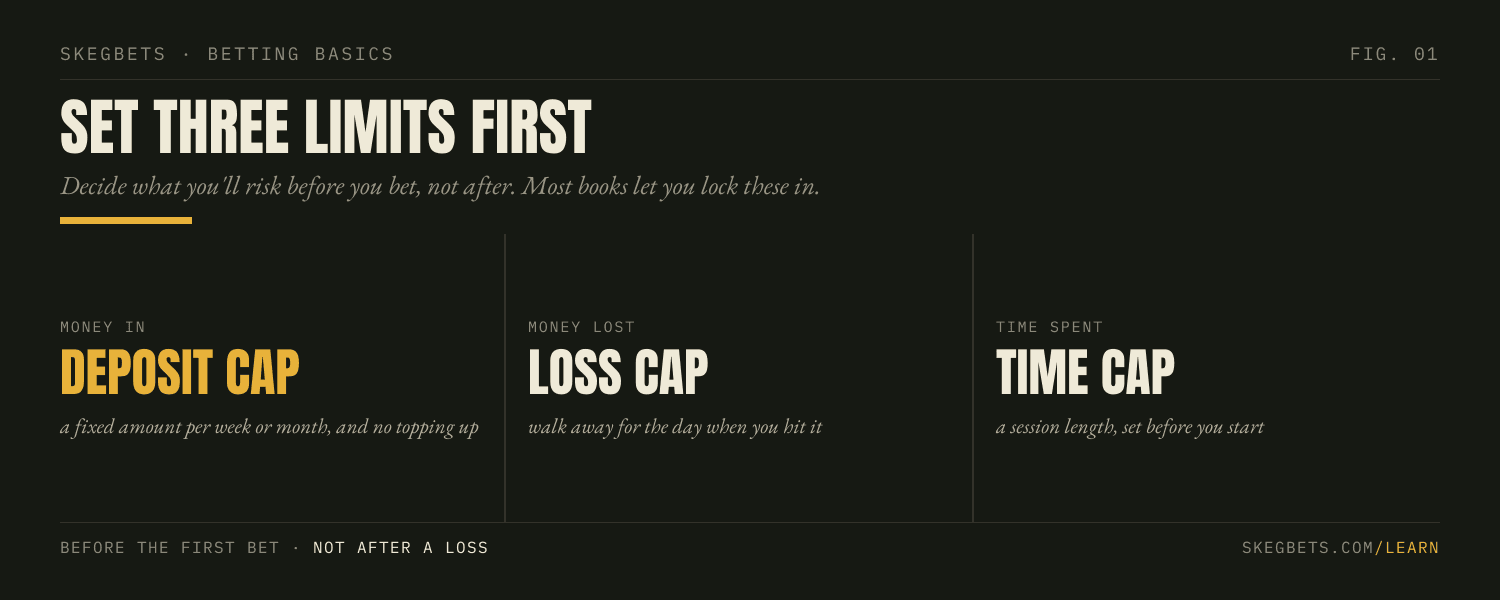
A deposit cap is a fixed amount you’ll put in over a week or a month, with no topping up when it’s gone. A loss cap is the point where you walk away for the day, no exceptions. A time cap is a session length you decide in advance, because hours slip away faster than money does. Every licensed sportsbook lets you set deposit and time limits in your account settings, so you don’t have to rely on willpower in the moment. This is the discipline side of bankroll management: that guide sizes your bets for growth, this one keeps the whole activity inside a budget you chose.
Never chase a loss
If there’s one habit that turns recreational betting into a problem, it’s chasing: raising your stake to win back what you just lost.

The trap is that the bet size climbs while the odds stay exactly where they were. A $100 loss becomes a $200 bet, then a $400 bet, and a bad night becomes a much worse one. Being down doesn’t make the next bet more likely to win. Your loss cap exists precisely to stop this before it starts: when you hit it, the day is over, win or lose.
Entertainment, not income
The reason limits matter is baked into the math. The house holds an edge on every standard bet, which is why betting can’t be a reliable income.
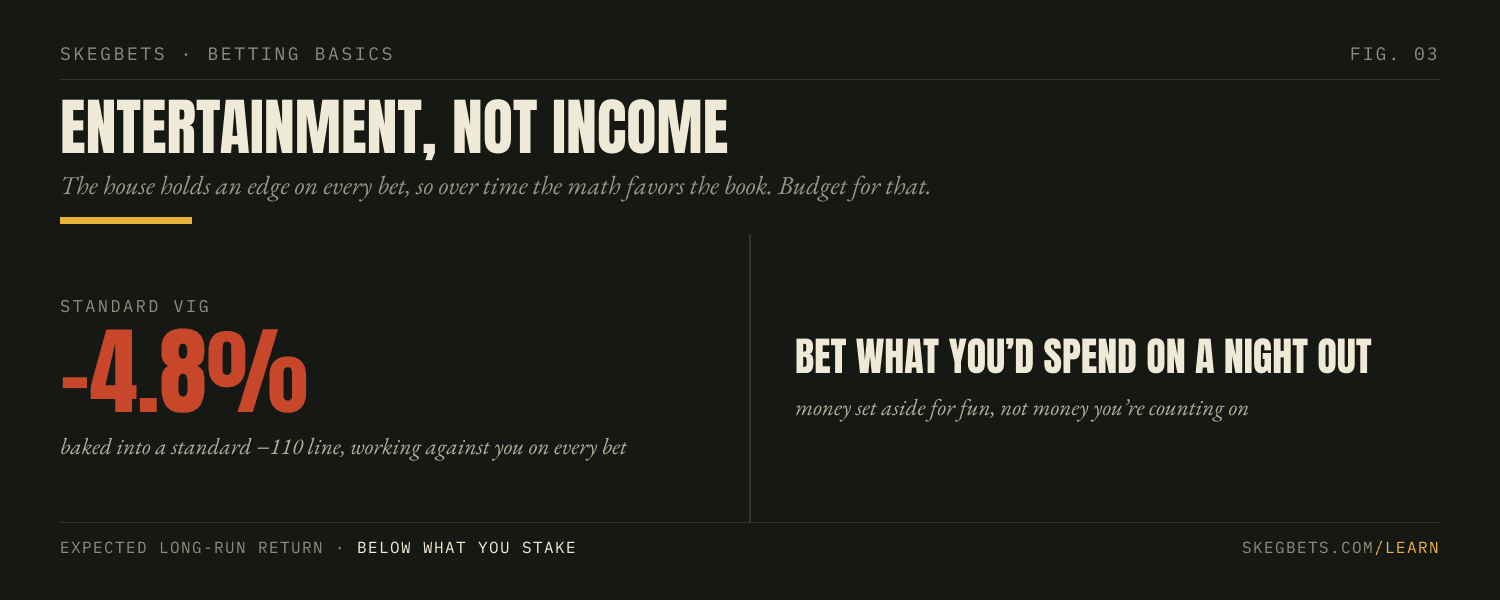
A standard −110 line carries roughly a 4.8% built-in margin, the vig, working against you on every bet. The math of sports betting shows why that edge grinds most bettors down over time. A tiny number of professionals beat it with relentless discipline, but for nearly everyone betting is an expense, not an earner. Stake only money set aside for fun, the same way you’d budget for a night out, never money you’re counting on for something else.
Warning signs and where to get help
Watch for the signals that betting has stopped being entertainment: betting more than you planned, chasing losses, hiding it from people close to you, borrowing to bet, or feeling anxious when you’re not. None of those mean you’ve failed; they mean it’s time to step back.
Help is free, confidential, and available 24/7. In the US, call or text the National Problem Gambling Helpline at 1-800-GAMBLER. Every licensed sportsbook also lets you set hard deposit limits, take a timeout, or self-exclude in a couple of taps. Reaching out early is the responsible move, not a last resort.
| Habit | Why it matters | The guardrail |
|---|---|---|
| Set limits first | Decisions are clearer before a loss | Deposit, loss, time caps |
| Don't chase | Stake rises, odds don't | Stop at the loss cap |
| Budget as fun | The house holds the edge | Only spare money |
| Ask for help early | Problems compound quietly | 1-800-GAMBLER |
Frequently asked questions
What does responsible gambling actually mean?+
It means treating betting as paid entertainment with firm limits, not as a way to make money. In practice that is a deposit cap, a loss cap, and a time cap set before you bet, money you can afford to lose, and a hard rule against chasing losses. Most sportsbooks let you lock deposit and time limits into your account settings.
Why is chasing losses so dangerous?+
Because the bet size goes up while the odds stay the same. Doubling your stake to win back a loss turns one bad result into a bigger one, and the math behind the game does not change in your favor just because you are down. A pre-set loss cap is the single most effective guard against it.
Can you really make a living from sports betting?+
Almost no one does. The house holds an edge on every standard bet, so over a large sample the math favors the book, not the bettor. A small number of professionals grind out an edge with enormous discipline and volume, but for nearly everyone, betting is an entertainment expense, not an income source. Budget it that way.
Where can I get help for a gambling problem?+
Help is free and confidential. In the US, call or text the National Problem Gambling Helpline at 1-800-GAMBLER, available 24/7. You can also set deposit limits, take a timeout, or self-exclude directly inside any licensed sportsbook. Reaching out early, before it becomes a crisis, is the responsible move, not a last resort.
For the sizing side of discipline, see bankroll management and unit sizing, and for why the edge is so hard to beat, read the math of sports betting.
Free tools