The short version
When you place a bet matters almost as much as what you bet on. When to act early to capture line value, when to wait for confirmed lineups and injury news.
When you place a bet matters almost as much as what you bet on. Most recreational bettors place their bets whenever it’s convenient: the morning of the game, during their lunch break, or five minutes before kickoff. Sharp bettors treat timing as a variable to optimize, because the line you get and the information you have change significantly across the betting window.
The right time to bet depends on the sport, the bet type, and which edge you’re chasing. Sometimes that means firing at the opening number before the market wakes up; sometimes it means waiting until an hour before kickoff for the lineup to drop.
The case for betting early
You get the best number
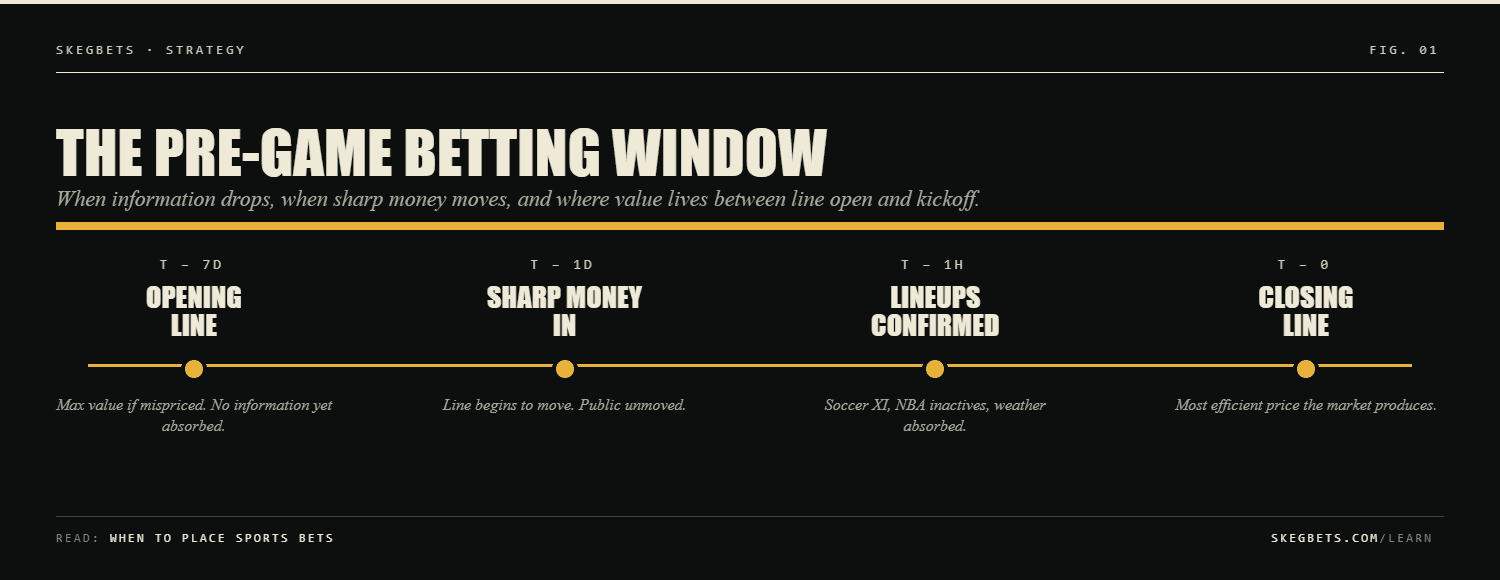
Lines open with the least market information priced in. Sportsbooks set an opening line based on their models, but sharp money hasn’t hit it yet, public sentiment hasn’t moved it, and injury news hasn’t been fully absorbed.
If you identify a line that’s mispriced at open, before the market corrects, you lock in maximum value. This is the core argument for early betting and it’s why closing line value (CLV) exists as a metric. A bet placed at -3 that closes at -6 beat the market by three points. That gap is real value, regardless of outcome.
Line movement works against you
Markets move toward the true probability over time. If you like a team at +3, the line is more likely to move to +2.5 or +2 than to +4 as sharp money and public action come in. Waiting to place a bet you’ve already identified as valuable is leaving money on the table.
| Time of bet | Typical risk |
|---|---|
| Opening line | Mispriced market, maximum value opportunity |
| 24-48 hours before | Sharp money has moved the line, but public hasn't |
| 60-90 minutes before | Lineup news absorbed, public sentiment fully priced |
| Just before kickoff | Closing line, the most efficient price |
News hasn’t broken yet
Injury news, lineup changes, and weather updates move lines significantly. If you have a strong read on a team before a key injury is reported publicly, you can act before the book adjusts. Early bettors occasionally capture significant line value simply by being first to react to breaking news.
The case for waiting
Confirmed lineups, especially in soccer
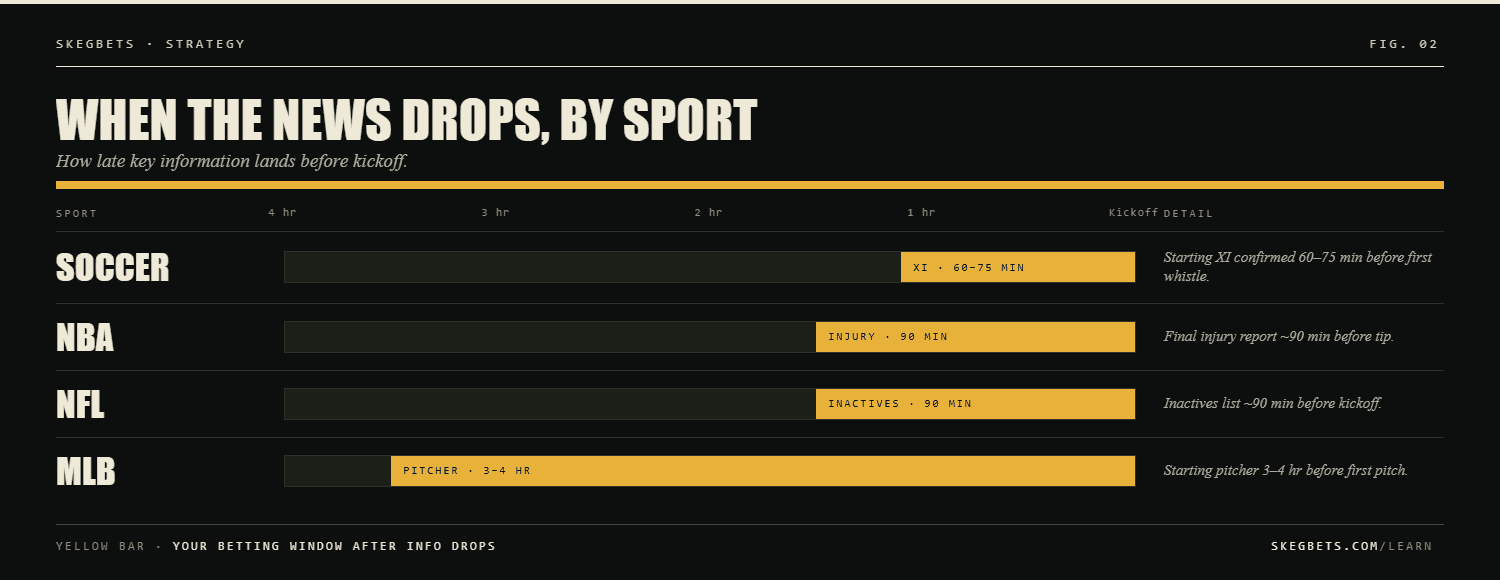
In soccer, the starting eleven is everything. A match that looks like a clear home win at -150 becomes a coin flip if the first-choice striker is rested or the holding midfielder is missing. Lineups are typically confirmed 60-75 minutes before kickoff.
Betting before confirmed lineups in soccer is a meaningful information disadvantage. A bet placed the night before on a team missing their best player, information that wasn’t available, is a bet placed without the full picture. In soccer, no other timing decision moves your results as much as waiting for the XI.
Starting pitchers in MLB
Baseball has the same problem in a different position. The starting pitcher is the most important variable in any MLB totals or moneyline bet, and bets placed before confirmed starters carry real exposure. A line built around a frontline starter looks very different when an opener or a third-rotation arm takes the mound.
Most sharp MLB bettors wait for confirmed pitching matchups before placing their bets, typically finalized a few hours before first pitch.
Late injury news
In the NBA and NFL, injury reports are updated close to game time. A star player listed as questionable may be ruled out 90 minutes before tip-off. Waiting allows you to incorporate the most current health information before committing.
| Sport | Key information that emerges late | Recommended approach |
|---|---|---|
| Soccer | Confirmed starting XI | Wait until lineup release (60-75 min before) |
| MLB | Confirmed starting pitcher | Wait for pitching confirmation |
| NBA | Injury report updates | Monitor final injury report (90 min before tip) |
| NFL | Injury designations | Wait for Sunday morning inactives list |
Closing line value: why timing and value are linked
The closing line represents the market’s most efficient price. Every major sportsbook’s closing line incorporates all publicly available information and the full weight of sharp and public money.
Consistently beating the closing line, placing bets at better prices than where the market closes, is the strongest measurable indicator of a sharp bettor. It means you are identifying value before the market does, which is the entire game.
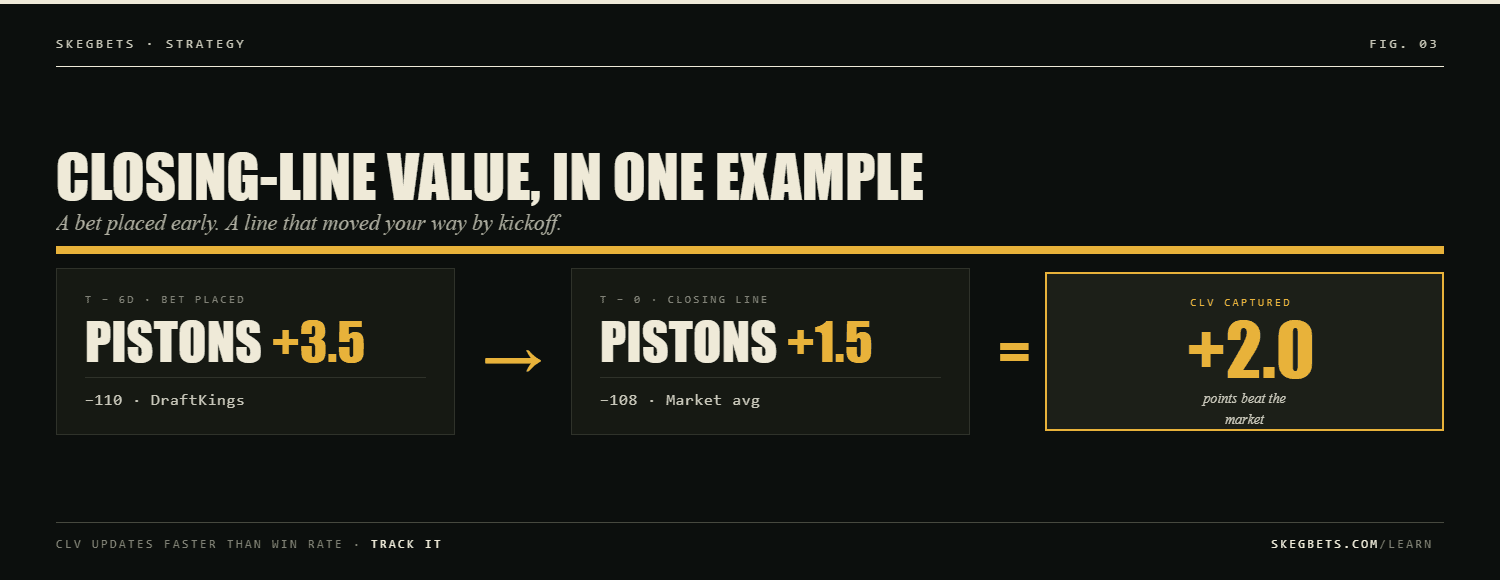
Early betting and beating the close are the same habit. Waiting for the closing line, by definition, means you never beat it. For the underlying math of why this matters, including the 52.4% breakeven, variance bands, and bankroll survival, see our math of sports betting article.
A sport-by-sport guide
Soccer
Wait for confirmed lineups. The attacking and defensive structure of a soccer team is so dependent on specific personnel that betting before the XI is confirmed is an unnecessary information risk. Once lineups drop, act quickly, because books often adjust within minutes.
NFL
The best value in NFL betting is typically mid-week, after the opening line is set but before the public money moves it toward the favorite. Weekend casual bettors push lines on popular teams. Fading this movement by betting earlier captures value the public creates.
NBA
The injury report is the key variable. Monitor the final report, typically released 90 minutes before tip-off. If a star player is ruled out and the line hasn’t fully adjusted, there’s a window of opportunity.
MLB
Confirm the starting pitcher before placing totals or moneyline bets. Lines are typically efficient once starters are confirmed, so the value window is narrow. But the risk of betting blind on pitching is significant.
Practical takeaways
Your timing playbook
Timing is not the most important variable in sports betting. The quality of your analysis is. But all else being equal, the bettor who acts on value before the market corrects it will beat the one who waits. The exception is information-dependent bets in soccer and baseball, where waiting for confirmed lineups is non-negotiable.
So the rule has two sides. If your edge is in the price, bet early and bank it. If your edge depends on news that hasn’t dropped yet, wait for it. And once the game kicks off, the timing rules change entirely: see live betting.
Frequently asked questions
Should I always bet as early as possible?+
Not always. Betting early captures value before the market moves, but it means betting without full information. In soccer and baseball, where starting lineups and pitchers are confirmed close to game time, waiting is often the sharper play.
What is closing line value and why does it matter?+
Closing line value (CLV) is the difference between the odds you locked in and the odds at game time. Consistently beating the closing line means you are identifying value before the market does. It is the strongest measurable indicator of a sharp bettor over a large sample.
When should I bet on soccer matches?+
After confirmed lineups are released, typically 60-75 minutes before kickoff. Betting before lineups exposes you to significant personnel risk: a missing striker or suspended midfielder can completely change the expected outcome of a match.
What about live betting, is that a separate consideration?+
Live betting operates on different principles entirely and warrants its own discussion. The timing framework above applies to pre-game markets only.
Want to put timing into practice? Our live picks feed shows the price we took and when, so you can audit closing-line value against every published call. The odds converter turns American odds into implied probability, and the archive tracks every resolved pick with W/L/P attached.
Free tools