There’s an edge in sports betting that takes no model, no handicapping, and no nerve. It’s just refusing to take a worse price than you have to. Line shopping is the closest thing to free money in the whole game, and most bettors leave it on the table.
The same bet, four prices
Sportsbooks set their own numbers, and they don’t agree. At any given moment the exact same side of the exact same game is priced differently across books, sometimes by a little, sometimes by a lot.
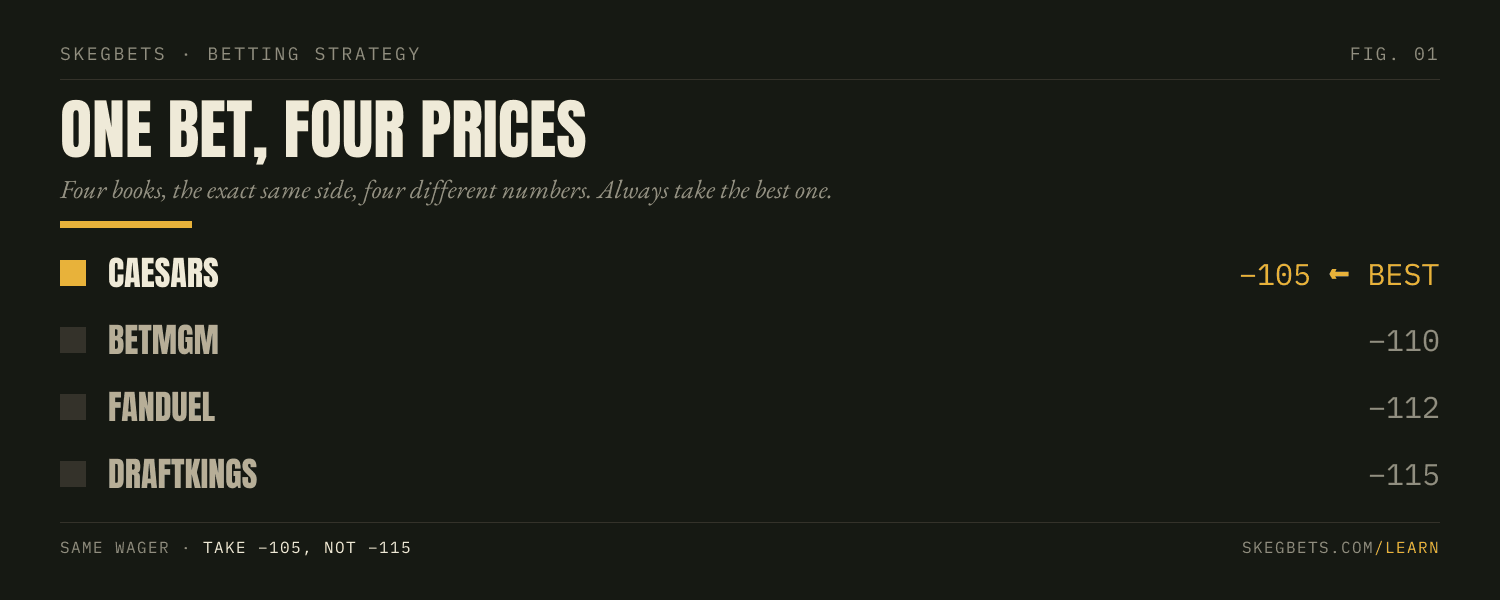
One side might be −105 at one book and −115 at another, for the identical wager. Taking the −105 isn’t a different, riskier bet, it’s the same bet at a better payout. Leaving it for the −115 is just handing the book extra margin for no reason.
What the gap is worth
A ten-cent difference in price sounds trivial. It isn’t. The price you take sets the win rate you need to break even, and a worse number raises that bar.
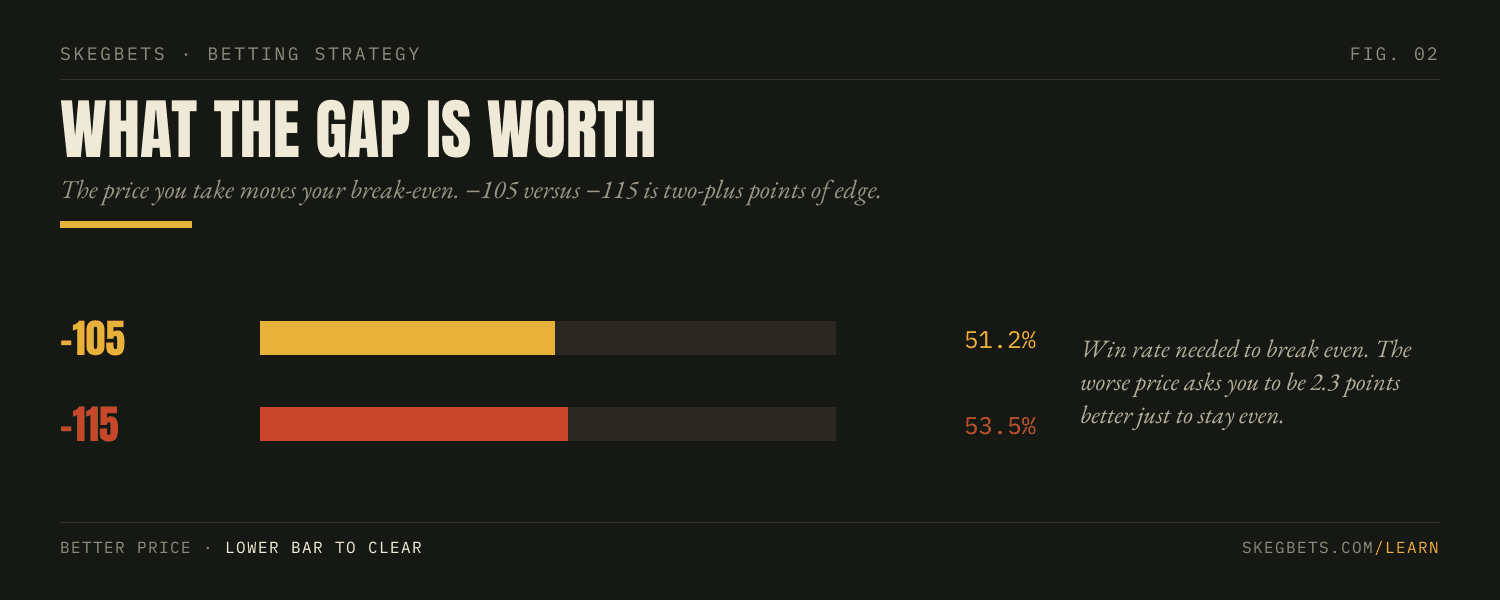
At −105 you break even by winning 51.2% of the time. At −115 you need 53.5%. That gap, 2.3 points, is enormous: it’s about the size of the entire edge a sharp bettor works all season to build. Giving it back on every bet by not shopping is the quietest way to turn a winning approach into a losing one. The odds converter turns any price into its break-even percentage so you can see the difference for yourself.
Line shopping lowers the vig
Shopping doesn’t just help one side of a bet, it shrinks the book’s built-in margin across the board. Buy each side at whichever book prices it best and the combined hold falls toward fair.
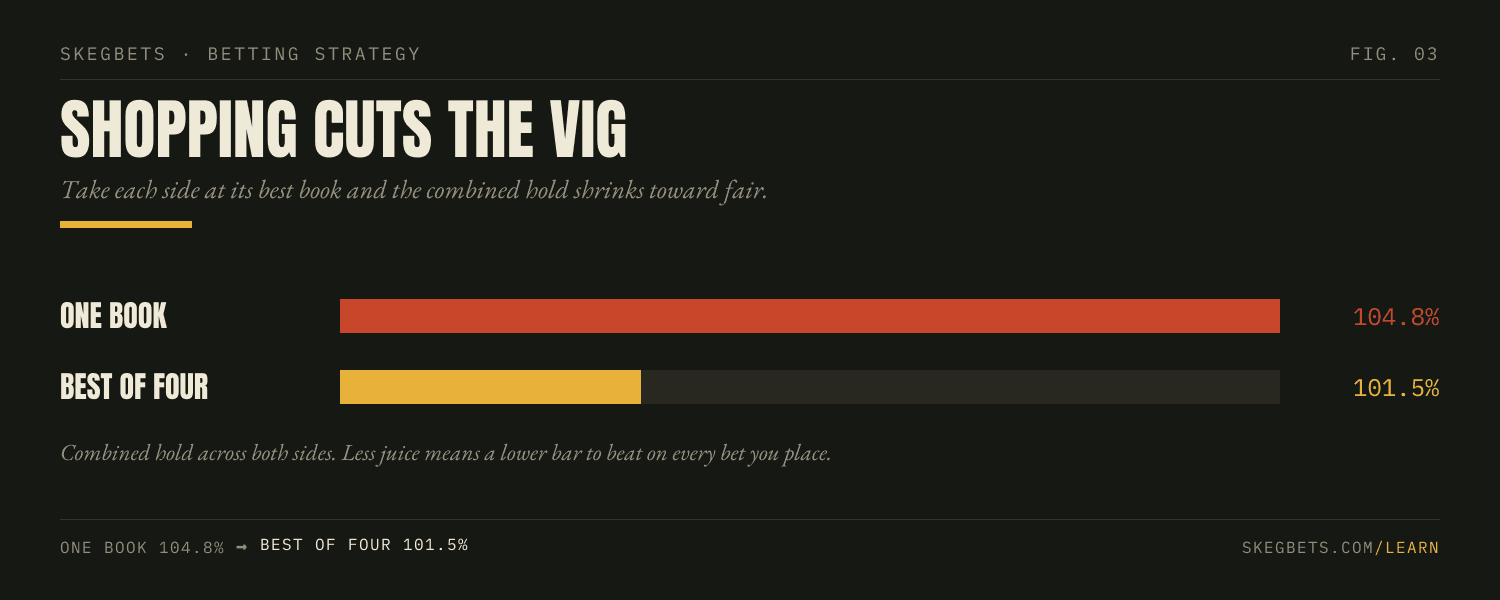
One book charges roughly a 4.8% hold on a standard game. Take the best available number on each side across a few books and that effective hold can drop to around 1.5%. You’re paying a third of the tax for the same action. The no-vig calculator shows the hold baked into any pair of prices.
How to do it
Keep accounts at a few books, and before you place a bet, glance at the same market across all of them and take the best number. It takes seconds and it never costs anything. On the picks we publish, the price shown is the best line we found at the time, so you can see line shopping in practice on every play in our live feed. The discipline pairs with timing: when you bet decides which number exists, and shopping decides which book you take it at.
| Price taken | Break-even win rate | Vs the best price |
|---|---|---|
| −105 (best) | 51.2% | the number to take |
| −110 | 52.4% | +1.2 pts harder |
| −112 | 52.8% | +1.6 pts harder |
| −115 | 53.5% | +2.3 pts harder |
Frequently asked questions
What is line shopping in sports betting?+
Line shopping means checking several sportsbooks and betting at whichever offers the best price for the wager you want. Because books set their own numbers, the same bet is often available at meaningfully different odds at the same moment.
Does line shopping really make a difference?+
Yes. Taking −105 instead of −115 on the same bet lowers the win rate you need to break even by more than two points. Over a season of bets, consistently getting the best number is the difference between a small loss and a small profit.
How many sportsbooks do I need to line shop?+
Two helps, three or four is plenty for most bettors. The goal is enough accounts that you can usually find a price near the best available, not every book in existence. Even a couple of options captures most of the benefit.
Is line shopping the same as arbitrage?+
No. Line shopping is taking the best price on one bet you want to make. Arbitrage is betting both sides of a game at different books to lock a guaranteed profit. Line shopping helps every bet; arbitrage is a separate, rarer play.
Line shopping is how you capture value; closing line value is how you prove you did. Pushed to its limit across books, it becomes arbitrage, and the same eye for the real number tells a good sportsbook bonus from a trap. For the bigger picture, start with how to bet on sports.
Free tools