Every sportsbook leads with a big bonus number, and almost none of it means what it looks like. The headline is real, but it comes wrapped in conditions that decide what the offer is actually worth. Once you can read those conditions, you can tell a good promo from a trap in about a minute.
A $100 bonus isn’t $100
The catch on almost every bonus is the rollover, also called playthrough: the money isn’t yours to withdraw until you’ve bet it through a set number of times.

A $100 bonus with a 10x rollover means you have to place $1,000 in bets before you can cash out. The bonus isn’t free money sitting in your account; it’s a head start you unlock by betting. The size of that multiple, and what it applies to, is the single most important number in any offer.
Do the playthrough math
Unlocking the bonus isn’t free, because every bet you place to clear the rollover pays the book its margin. That cost is the real price of the promo.
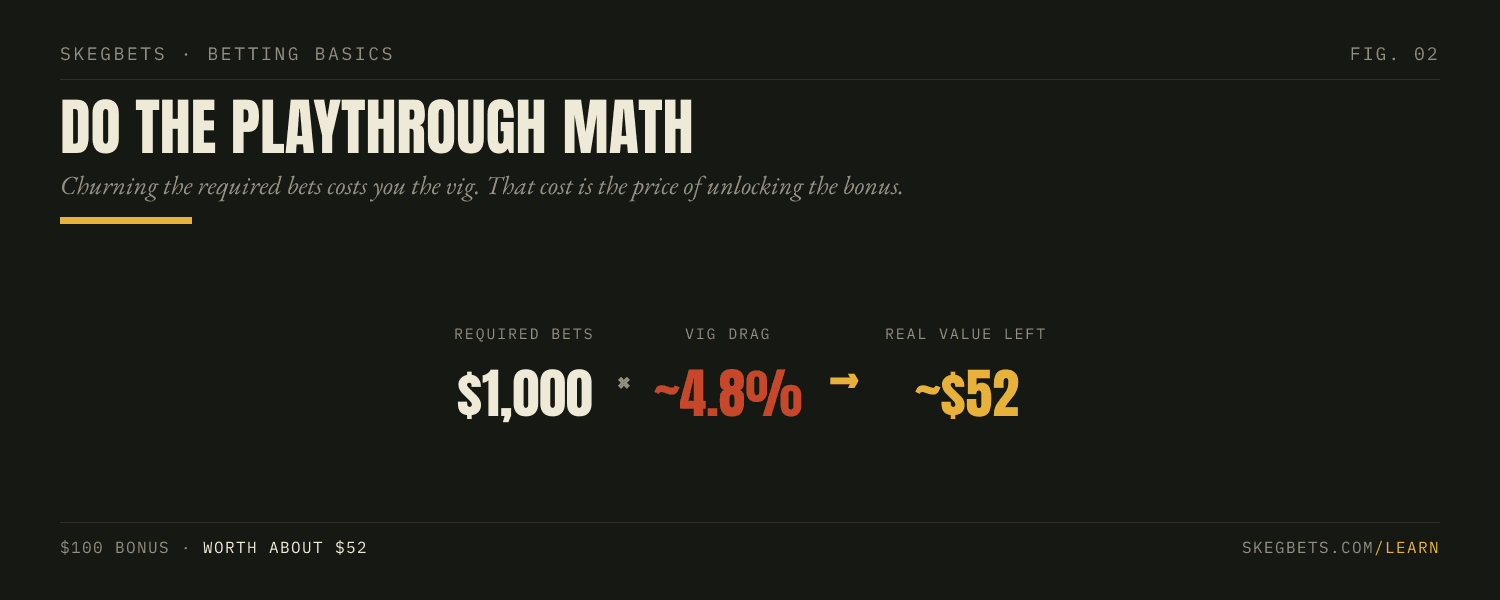
Churn $1,000 through standard −110 lines and the vig, around 4.8%, costs you roughly $48 along the way. So the $100 bonus is really worth something closer to $52 once it’s cleared. Still positive, but a long way from the headline. A higher rollover or a worse minimum-odds rule eats more of it, which is how two “$100 bonuses” can be worth wildly different amounts.
A bonus bet isn’t cash
The other common form is the bonus bet or free bet, and it has a quieter catch: when it wins, you keep the profit but not the stake.
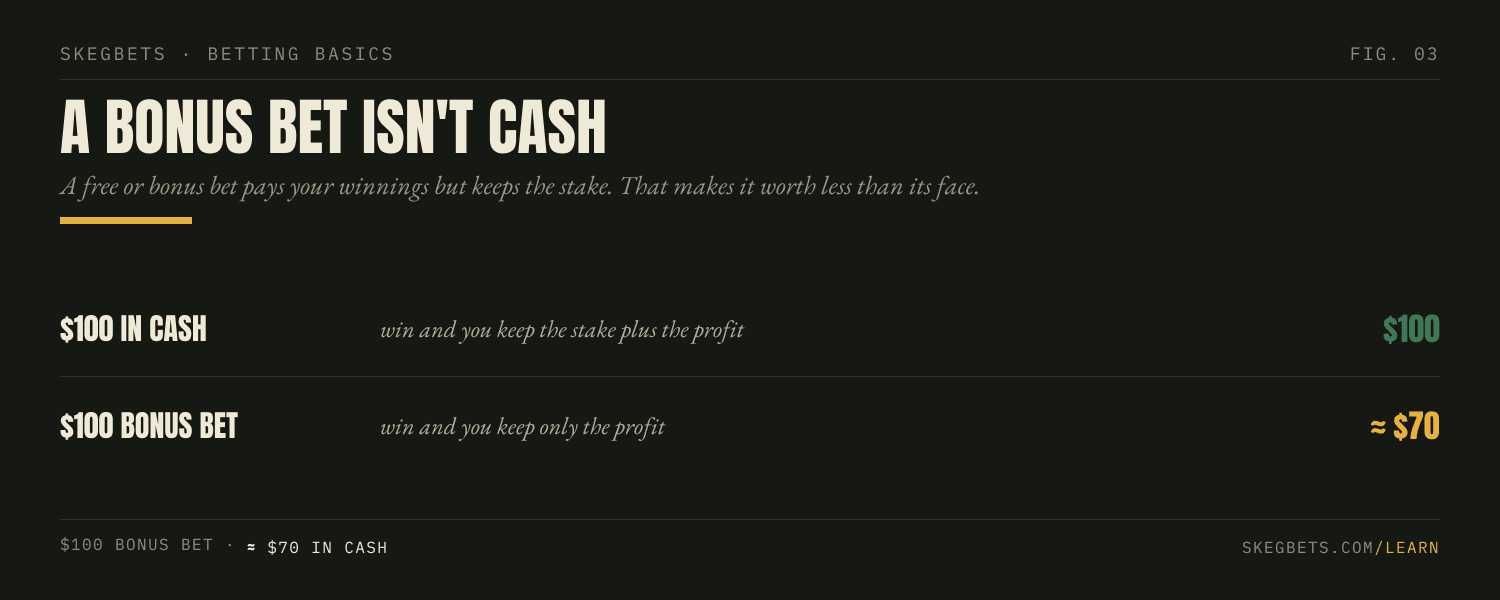
Win a $100 cash bet at even money and you collect $200: your stake back plus $100 profit. Win a $100 bonus bet at the same price and you collect just the $100 profit. That missing stake is why a bonus bet is worth roughly 70% of its face value. You can squeeze a bit more out of one by using it on a longer underdog, where the profit is the larger share of the return.
Reading the fine print
Before you opt in, find four things in the terms: the rollover multiple and what it applies to, the minimum odds that count toward it (heavy favorites are usually excluded), the expiry window, and which bet types are eligible. An offer with a low rollover, a friendly minimum-odds rule, and a generous deadline is genuinely good value. One with a 20x rollover that expires in seven days is mostly there to make you bet more than you planned. The same instinct that drives line shopping applies here: the advertised number is never the real one.
| Offer type | The catch | Rough real value |
|---|---|---|
| Deposit match | Rollover before withdrawal | ~50% of headline |
| Bonus / free bet | Keeps the stake on a win | ~70% of face |
| Odds boost | Capped stake, select markets | Small but real |
Frequently asked questions
What is a rollover or playthrough requirement?+
It's the amount you have to wager before bonus money becomes withdrawable cash. A 10x rollover on a $100 bonus means you must place $1,000 in bets first. Some books apply the multiple to the bonus, some to the deposit plus bonus, so the same headline number can mean very different things.
Are sportsbook bonuses worth it?+
Often yes, but for less than the headline. After you account for the vig you pay churning through the rollover, a $100 bonus with a 10x requirement is realistically worth somewhere around $50 to $60. That can still be positive, but treat the advertised figure as marketing, not money in hand.
What is the difference between a bonus bet and cash?+
A bonus bet, or free bet, returns only your winnings if it hits, not the stake. So a winning $100 bonus bet at even money pays $100, where a winning $100 cash bet pays $200 (your $100 back plus $100 profit). That makes a bonus bet worth roughly 70% of its face value, depending on the odds you use it on.
Do I have to bet the bonus all at once?+
Usually no. The rollover is a total wagering target you can reach across many bets, but watch for catches in the fine print: a minimum-odds rule (often around −200 or shorter is excluded), an expiry date, a maximum qualifying bet, and rules on which bet types count toward the requirement.
A bonus is just another place the advertised number hides the real one. See why the vig makes the rollover cost what it does, squeeze value the durable way through line shopping, and keep your stakes sane with bankroll management.
Free tools