Football plays once a week, which makes every game its own event and every schedule quirk a real edge. Rest, travel, and familiarity move NFL lines as much as talent does, and the market is slow to price the spots where a team is simply set up to struggle.
The short week
One schedule spot matters more than the rest. A team playing on short rest is carrying two disadvantages into the game.
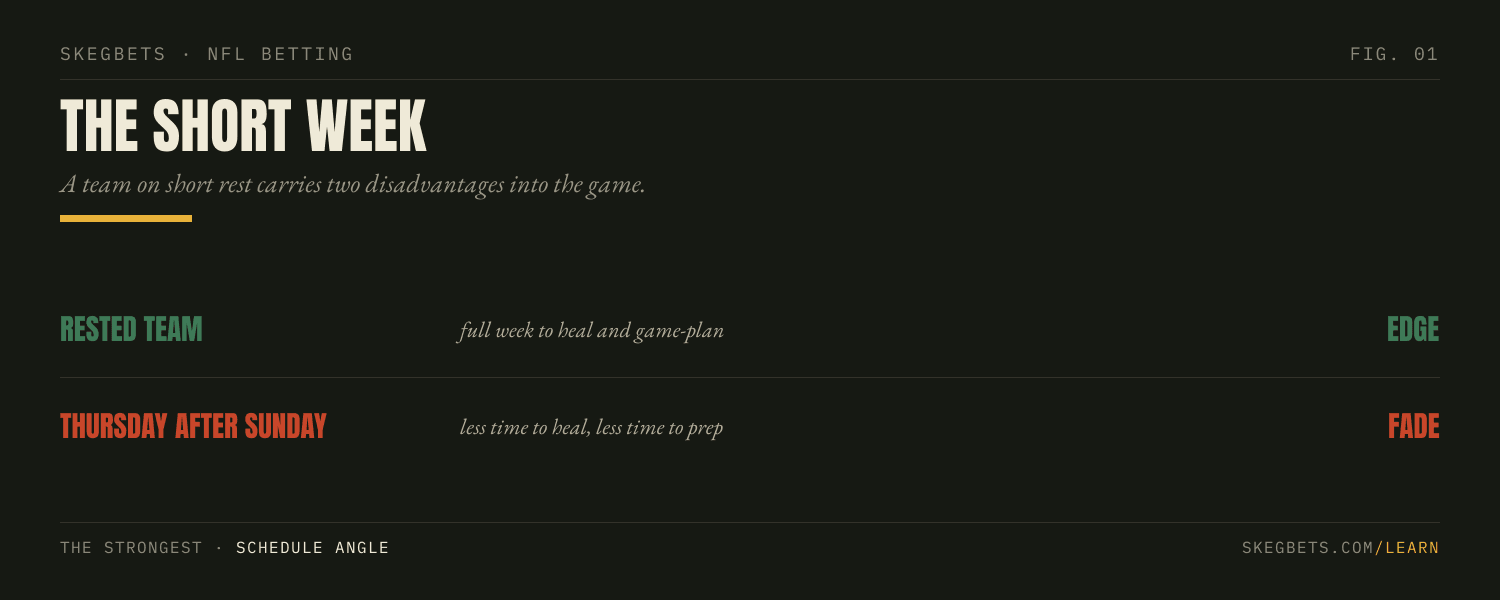
A team on a short week, most often a Thursday game after a physical Sunday, has less time to heal and less time to plan. The toll is heaviest on a road team or one coming off a bruising matchup, and it shows up in slow starts and tired legs late. When one side is on short rest and the other is not, the rested team and the over are both worth a look. The line moves for it, but rarely the full distance.
Byes and travel
Beyond the short week, the broader rest and travel picture tilts games in quieter ways.
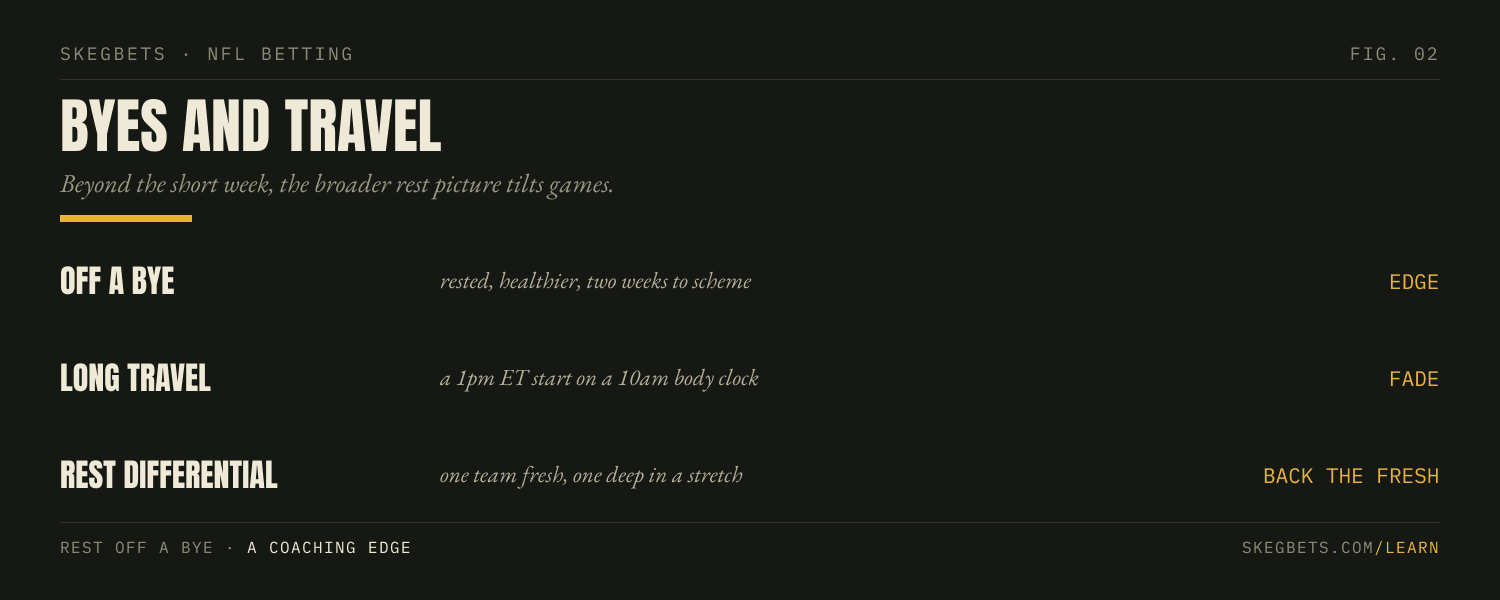
A team off a bye is rested, healthier, and has had two weeks to scheme, a coaching edge that the better staffs press. On the other side, travel wears teams down: a West Coast team kicking off at 1pm Eastern is playing on a 10am body clock, and a long road trip late in the year saps legs. Rest differential, one team fresh and the other deep in a stretch, is the cleanest version of the angle.
Divisional games and home field
Two more pieces round out the picture, and one of them is smaller than most bettors assume.
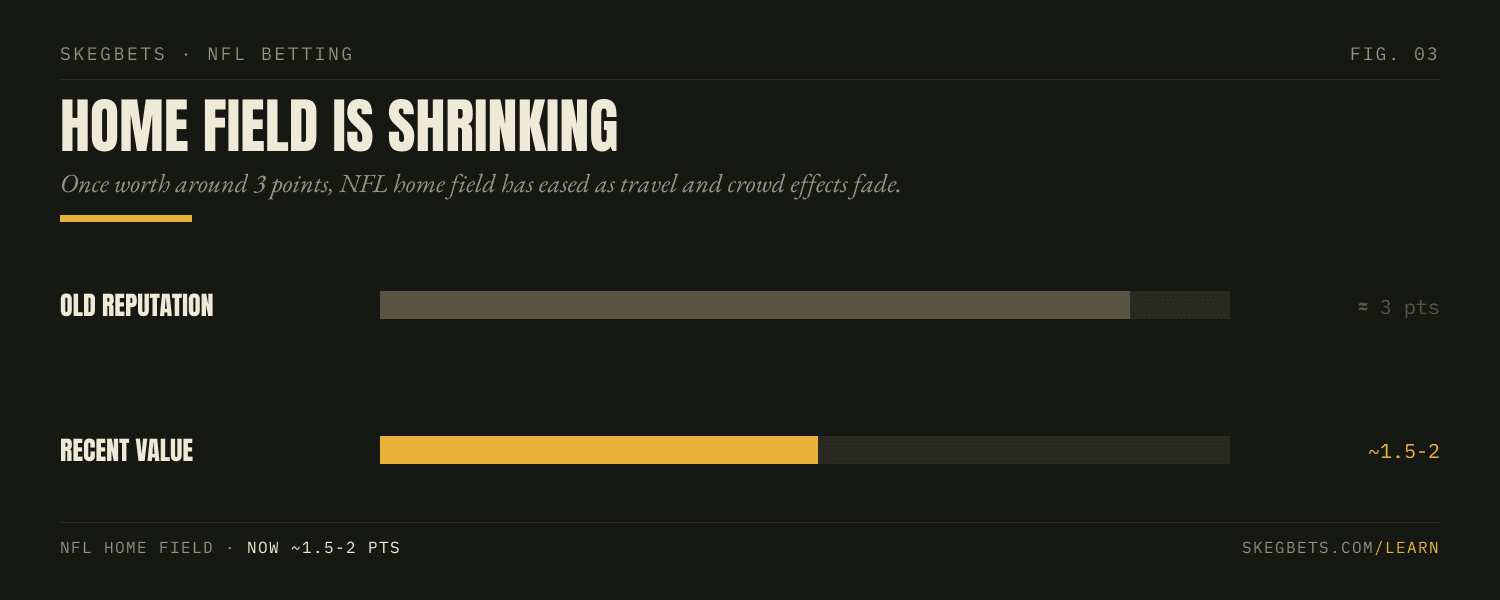
Divisional games tend to play closer than the spread, because rivals who meet twice a year know each other cold and the underdog hangs around. And home field is worth less than its reputation: once near 3 points, it has shrunk toward 1.5 to 2 as travel and crowd effects fade. Both point the same way, toward the points and toward live road dogs, especially in the division.
Stacking the spots on one team
Lead with the short week, layer in byes, travel, and divisional familiarity, and treat home field as a small thumb on the scale rather than a thesis. One spot alone rarely justifies a bet; the play sharpens when a short week, a travel grind, and a rest deficit all land on the same team while the line only credits one of them. Pricing that pileup before kickoff settles it is ordinary closing line value, earned a few hours early. The other big situational input, the forecast, lives in betting NFL totals.
| Spot | What it does | How strong |
|---|---|---|
| Short week | Less rest + less prep | Strongest |
| Rest off a bye | Two weeks to heal + scheme | Strong |
| Travel | Cross-country, early start | Moderate |
| Divisional | Familiar rivals stay close | Lean to the dog |
| Home field | Crowd + travel saved | Small (~1.5-2 pts) |
Frequently asked questions
What is a short week in the NFL?+
Playing again on fewer than the usual days of rest, most often a Thursday game after a physical Sunday. The team has less time to recover and game-plan, and the disadvantage is largest for a road team or one coming off a hard-hitting matchup. It is the most reliable schedule angle in football.
Does a bye week help a team?+
Yes, modestly. A team off a bye is rested, healthier, and has had two weeks to prepare, which is a real coaching edge, especially for well-coached teams. The market prices some of it, but not always the full amount when the opponent is also in a tough spot.
How much is home field worth in the NFL?+
Less than it used to be. Home field has historically been worth around 2 to 3 points, but it has shrunk toward 1.5 to 2 in recent seasons as travel and crowd effects fade. Don't overpay for home field, and be willing to back a live road dog.
Are divisional games closer than the spread?+
Often. Division rivals play twice a year and know each other well, which tends to compress the margin and help the underdog keep it close. Familiarity is a real reason to lean toward points in divisional matchups, particularly later in the season.
For the full picture, start with how to bet on football, apply the rest read to the point spread, and see the spots we play in our live feed.
Free tools