Hockey is the most schedule-driven sport on the board. Teams play three and four times a week, criss-cross time zones, and rest their goalies on a plan. Read the calendar and you can find the soft spot before the line fully prices the tired legs and the backup in net.
The back-to-back
One schedule spot matters more than all the others combined. The second night of a back-to-back stacks two disadvantages on the same team.
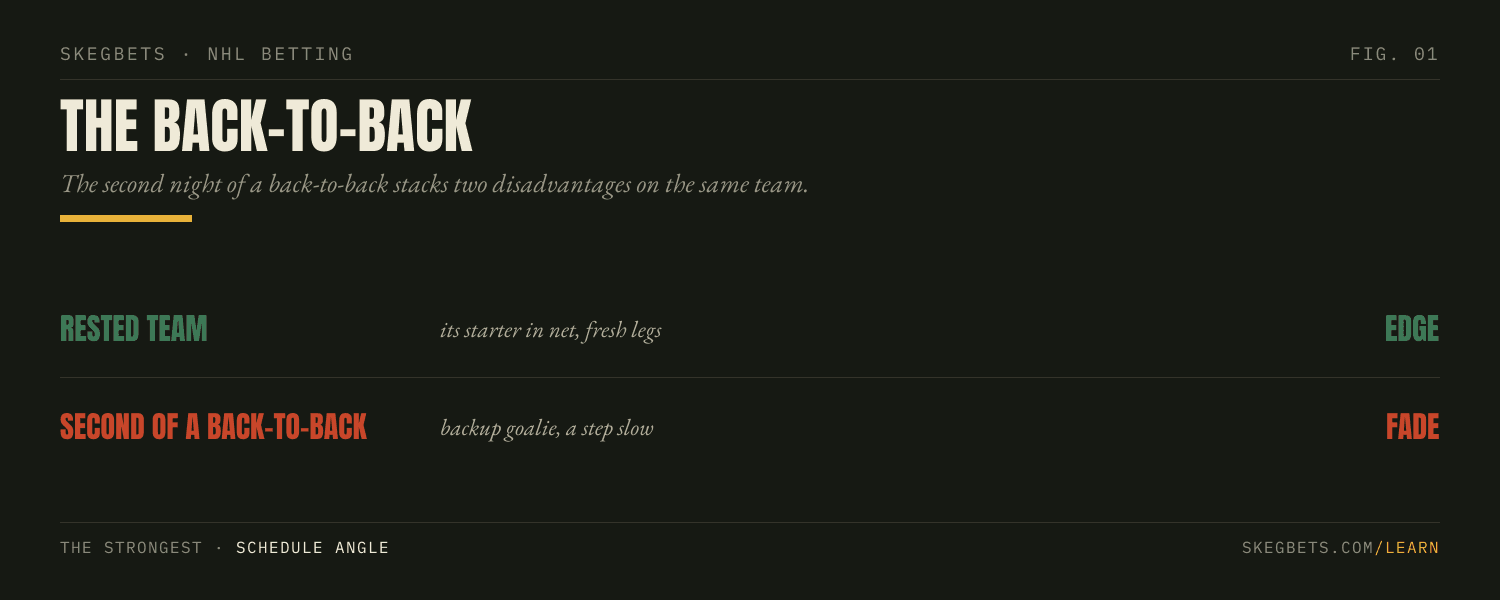
A team on the back half of a back-to-back is usually on its backup goalie and a step slow, and it’s often facing a rested opponent. That’s a known downgrade in net plus tired legs, the exact spot covered in goalie betting. The line moves for it, but rarely the full distance, so the rested side and the over are both worth a look. Watch the goalie confirmation to be sure the backup is really in.
Rest and the schedule
Beyond the strict back-to-back, the broader rest picture tilts games. Fatigue builds across a dense week or a long trip.
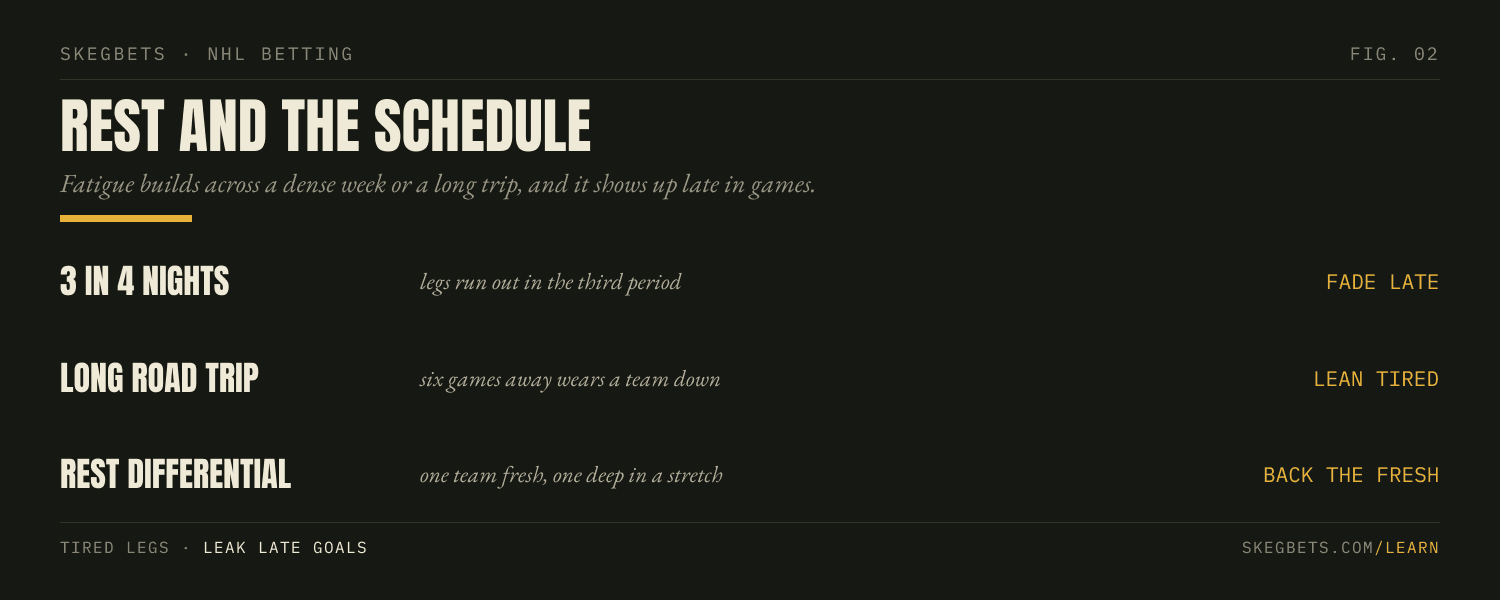
A side playing its third game in four nights, or closing a six-game road trip, runs low on legs in the third period, where tired teams bleed late goals. A clear rest differential, one team fresh and the other deep into a stretch, is the cleanest version of the angle. The schedule context for every team is on our NHL stats pages.
Travel and home ice
Two more pieces round out the picture, and one of them is smaller than most bettors assume.
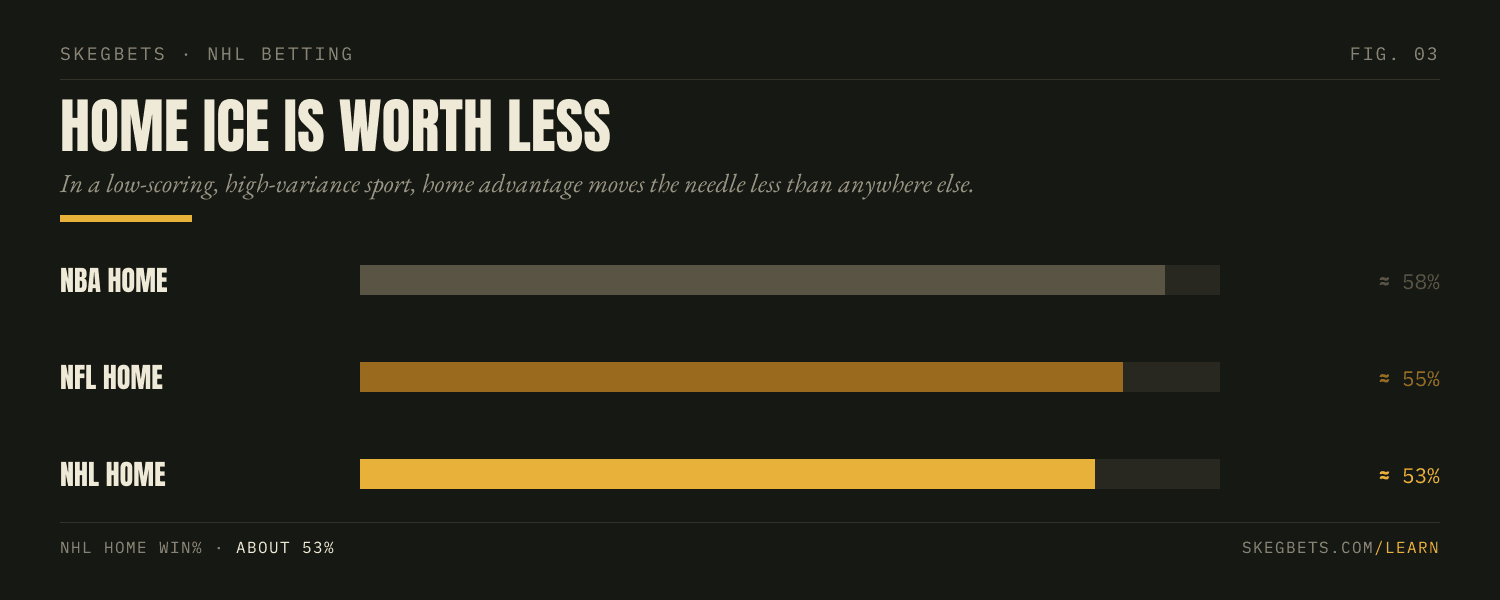
Travel across time zones, especially a body-clock-defying early start after a long flight, drags on a tired team. But home ice is worth less in hockey than in any other major sport: home teams win around 53%, against roughly 58% in the NBA. Last change and the crowd help at the edges, but in a low-scoring, high-variance game they don’t move the needle far. Don’t overpay for it.
Where the calendar beats the roster
Lead with the back-to-back, layer in the broader rest and travel picture, and treat home ice as a tiebreaker rather than a thesis. The best nights are the ones where the schedule says more than the standings do: a tired team on its backup, a fresh opponent off two days, and a number that still reads off raw talent. Beating the line to that read, before the backup confirmation moves it, is how you bank closing line value in hockey.
| Spot | What it does | How strong |
|---|---|---|
| Back-to-back | Backup goalie + tired legs | Strongest |
| Rest differential | 3-in-4 or long road trip | Strong |
| Travel / time zone | Long flight, early start | Moderate |
| Home ice | Last change + crowd | Small (~53%) |
| Letdown / lookahead | Flat after or before a big one | Tiebreaker only |
Frequently asked questions
What is a back-to-back in the NHL?+
Two games on consecutive nights for the same team. It is the most important schedule spot in hockey betting, because the team usually starts its backup goalie on the second night and plays on tired legs, often against a rested opponent.
Does rest really matter in hockey betting?+
Yes. A clear rest edge, a rested team against one playing its second night in a row or finishing a long road trip, shows up in both effort and goaltending. The market moves for it, but not always the full amount, which is where the value sits.
How much is home ice worth in the NHL?+
Less than you might think. NHL home teams win around 53% of the time, a smaller edge than in the NBA or NFL, because last change and the home crowd matter less in a low-scoring, high-variance sport. Don't overpay for home ice in hockey.
Are letdown and lookahead spots real in hockey?+
They exist but are softer and less reliable than back-to-backs and rest. A team coming off an emotional win or looking ahead to a rivalry game can come out flat, but treat these as tiebreakers, not as a bet on their own.
For the full picture, start with how to bet on hockey, see why the back-to-back is a goalie story in goalies and betting, and find the spots we play in our live feed.
Free tools