Baseball has the starting pitcher. Hockey has the starting goalie, and the parallel is exact: one player standing between his team and a huge share of the outcomes, named only hours before the game. Read the crease right and you’re ahead of half the market before puck drop.
The biggest lever in hockey
No single input moves a hockey number like the goalie. The gap between a starter in form and a backup is worth real goals, and it ripples through the moneyline, the total, and the puck line at once.
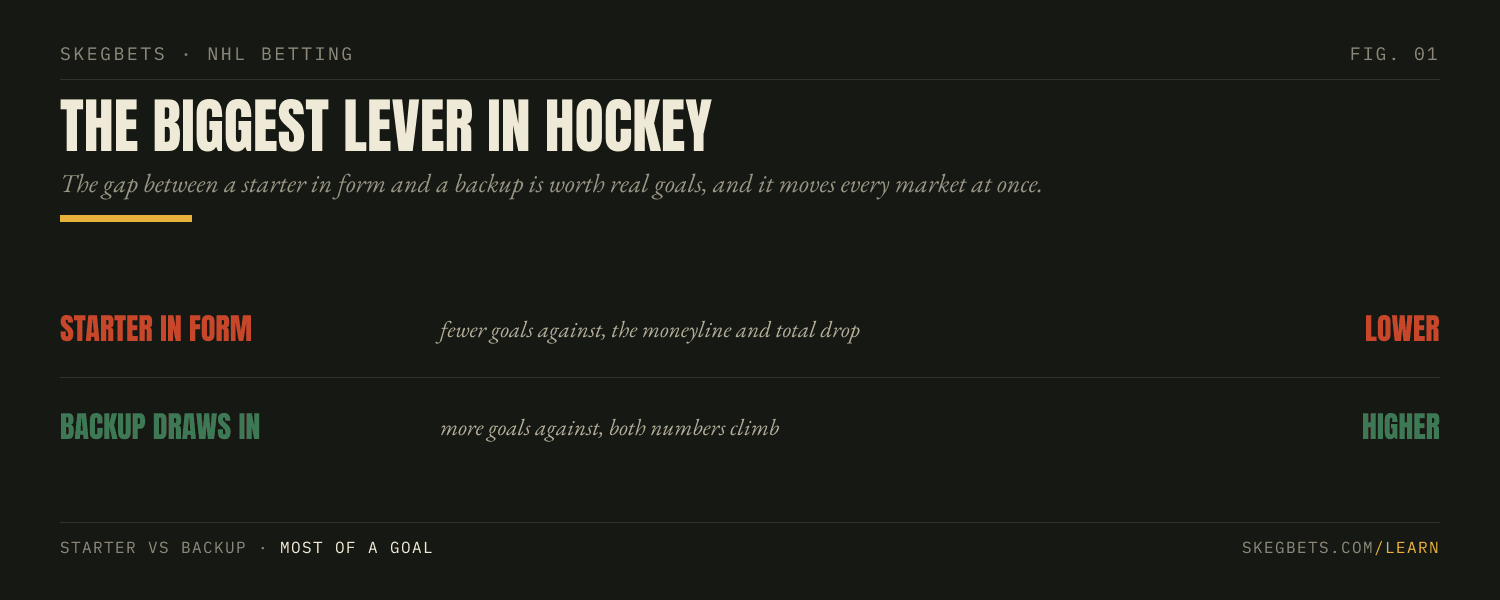
Swap a Vezina-caliber starter for a backup making his fifth appearance and a team’s expected goals against can jump most of a goal. That moves the moneyline twenty cents and lifts the total half a number. Because the start is confirmed only on game day, the bettor who is watching for it gets the price before it adjusts. That is also why timing your bet around the confirmation matters so much in hockey.
Judge a goalie by GSAx, not wins
A goalie’s record and raw save percentage are team stats wearing his name. To value the goalie himself, you need a number that strips out the skaters in front of him.
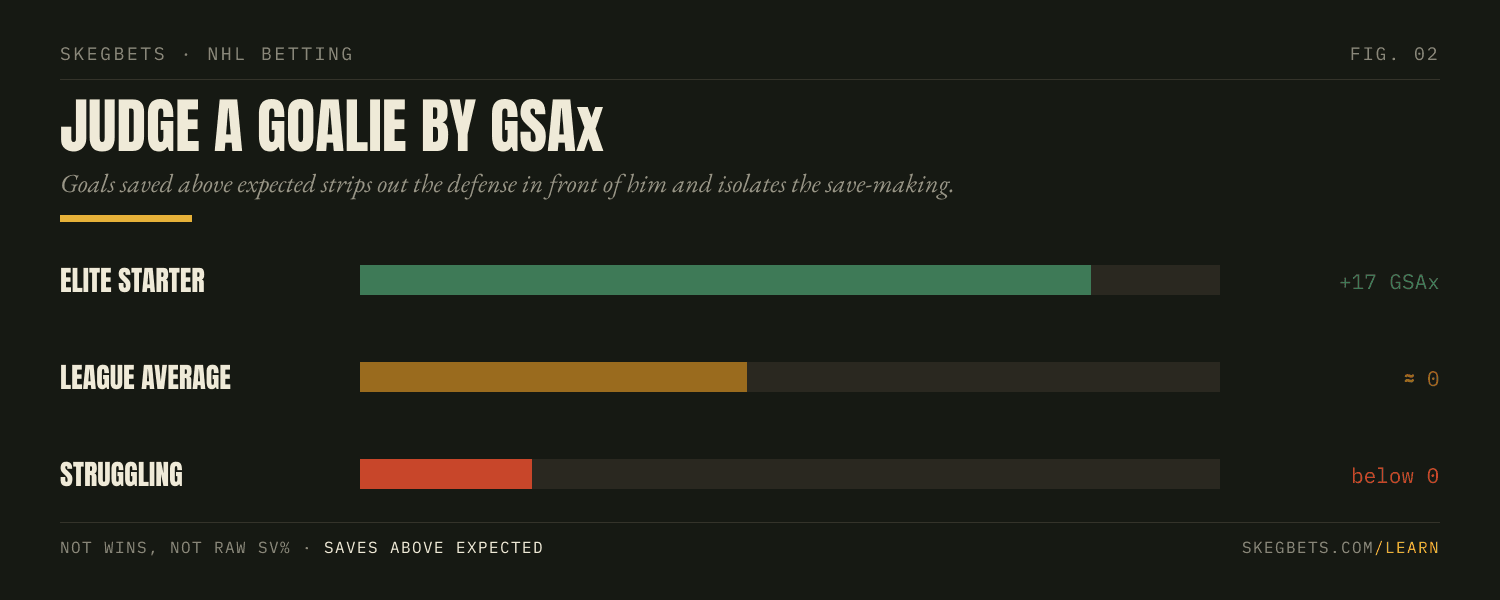
Goals saved above expected (GSAx) measures how many goals a goalie prevents beyond what an average goalie would, given the quality of shots he faced. It separates a great goalie dragging a leaky team from an ordinary one protected by a tight defense, a distinction wins and save percentage both hide. It’s covered alongside the other key metrics in how to read hockey stats.
Back-to-backs and tandems
Two scheduling facts hand you goalie edges if you’re watching for them.
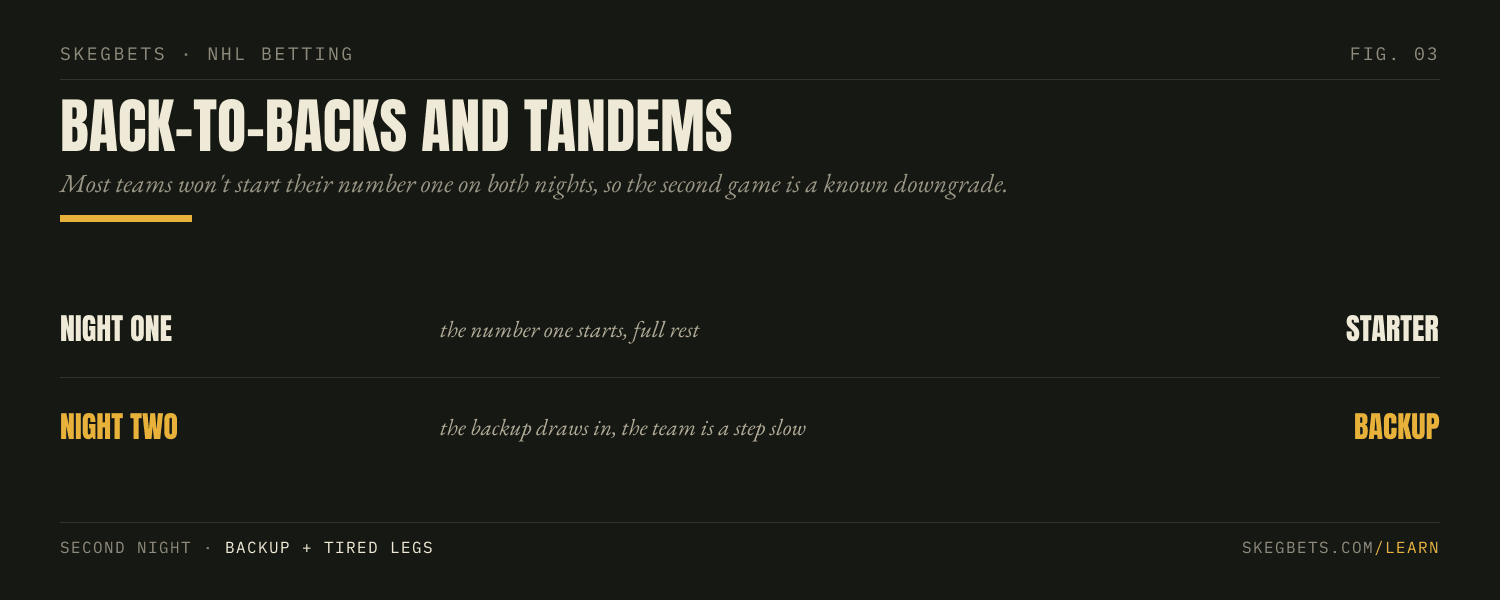
On the second night of a back-to-back, most teams rest the number one and start the backup, so you get a known downgrade in net plus a team on tired legs. And more clubs now run a true tandem, splitting starts close to evenly, which means the matchup stays genuinely uncertain until the morning. Both are reasons the confirmation is the single most valuable piece of hockey news, and a thread through our situational angles.
Reading the crease
Check who’s starting, lead with GSAx over wins, and flag the spots where a backup is in against a real offense or on the back half of a back-to-back. When the market hasn’t moved the full distance from the starter’s number to the backup’s, the gap is your expected value. Every goalie’s workload and numbers sit on our NHL stats pages.
| Signal | What to read | Why it matters |
|---|---|---|
| Who's starting | Confirmed on game day | The single biggest swing |
| GSAx | Saves above expected | The goalie, minus his defense |
| Back-to-back | Second night = backup | Known downgrade + tired team |
| Tandem | Starts split near 50/50 | Matchup unknown until AM |
Frequently asked questions
When are NHL starting goalies confirmed?+
Usually the morning of the game, around the morning skate, several hours before puck drop. Beat reporters and the team post it. Lines can move the moment a backup is confirmed, so the confirmation is the cue to bet, not a detail to check after.
Should I judge a goalie by wins or save percentage?+
Neither alone. Wins depend on the team scoring, and raw save percentage depends on the defense in front of the goalie. Goals saved above expected (GSAx) adjusts for the quality of shots faced and isolates the goalie's own work, so it is the number to lead with.
Should I always fade a backup goalie?+
Not blindly, but a backup making a rare start against a strong offense is one of the most reliable soft spots in hockey, especially on the second night of a back-to-back. The edge is largest when the market hasn't moved the full distance from the starter's number.
Why do back-to-backs matter for goalies?+
Most teams will not start their number one goalie on both nights of a back-to-back, so the second game often goes to the backup. That hands you a known downgrade in net, plus a team a step slow on tired legs, before the line fully accounts for either.
For the full picture, start with how to bet on hockey, see how the goalie sets the total, and find the goalie spots we play in our live feed.
Free tools