Ice time and power-play role decide most hockey props before the puck drops. A first-line winger logging 20 minutes with a spot on the top unit gets two or three times the chances of a fourth-line grinder, and that gap shows up in shots, points, and goals alike. The books know it, but they price ice time slower than usage shifts, and that lag is where the value sits.
The hockey prop markets
Four markets account for most hockey tickets. What each one tracks is simpler than the names suggest once you see the inputs.
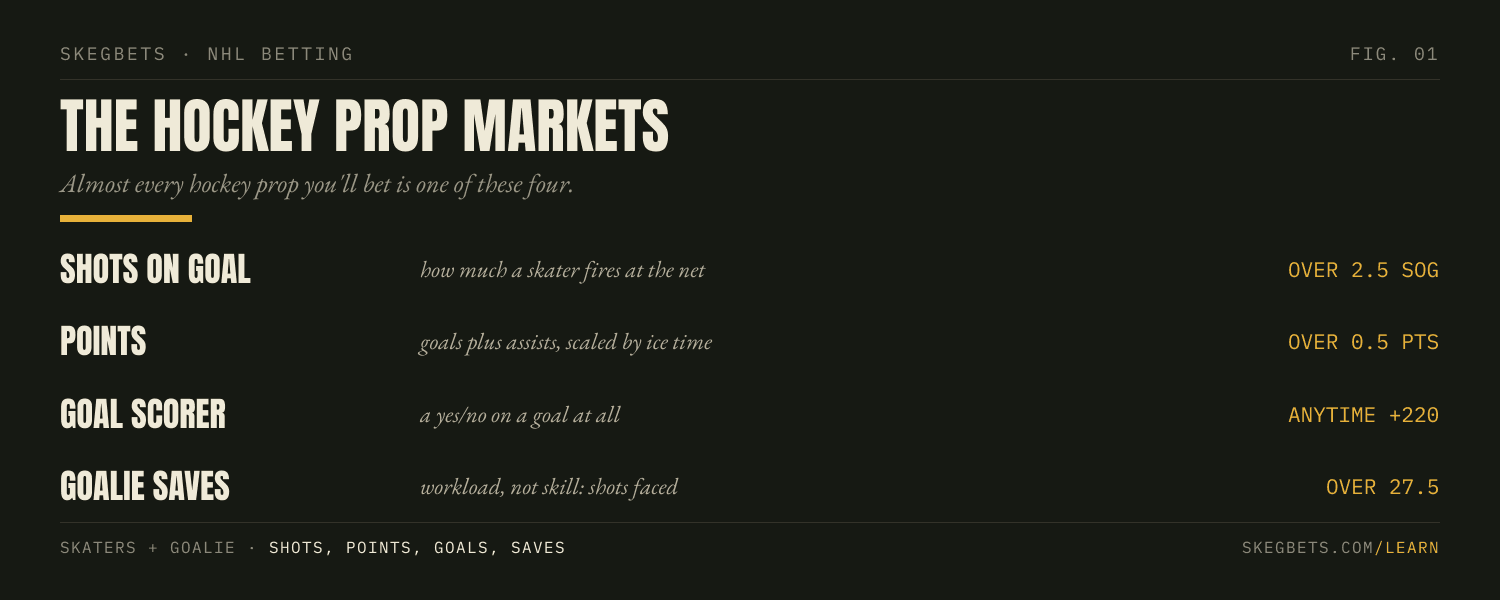
Shots on goal bet how much a skater fires at the net. Points combine goals and assists, scaling with ice time and linemates. Anytime goal scorer is a yes/no on a goal at all, the most popular ticket on the board. And the goalie’s saves prop bets workload, not skill. The general method for all four is in player prop betting strategy.
Shots on goal: volume times matchup
The shots prop is the steadiest one on the board, because shots happen far more often than goals and carry far less luck. It’s a simple stack.
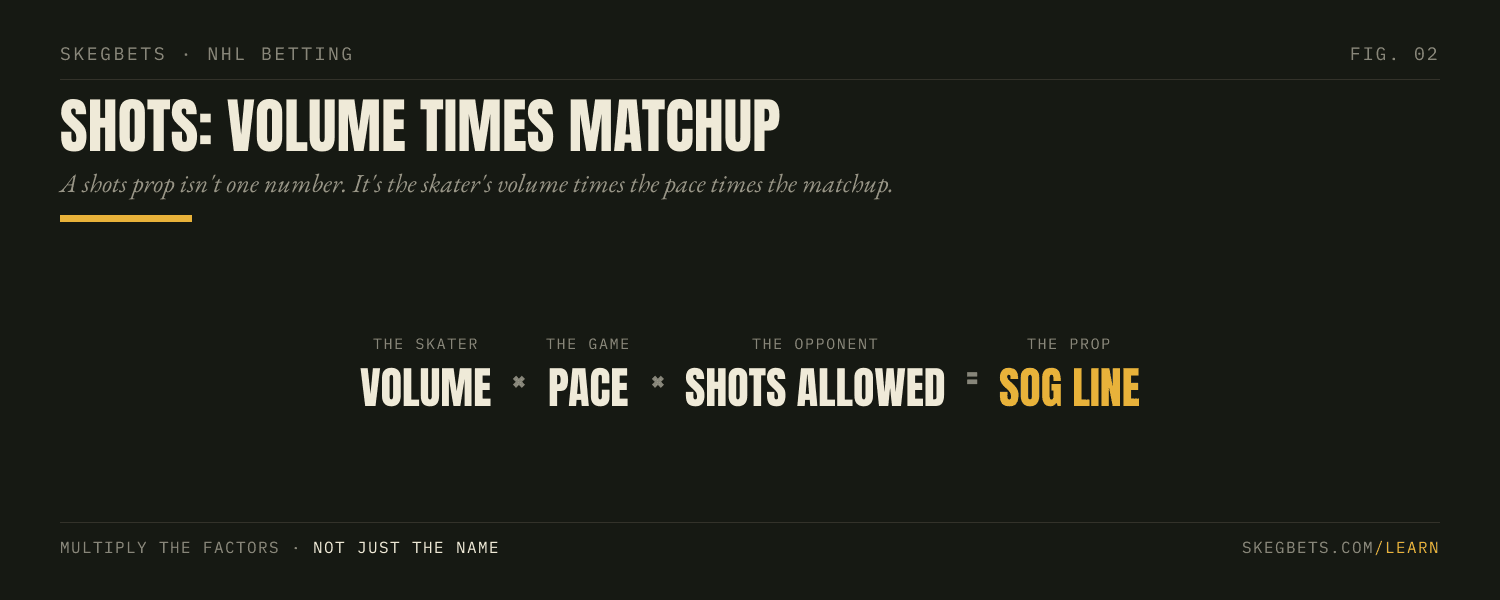
Take a skater’s shooting volume, multiply by the pace of the matchup, and adjust for how many shots the opponent allows. A shoot-first winger or a power-play quarterback on a fast team against a side that bleeds shots is the cleanest over there is. A low-event skater shut into a defensive matchup is the under. The inputs are all on our NHL stats pages.
The saves prop is a workload bet
The goalie saves prop trips up new bettors, because the instinct is to back the best goalie. The math says the opposite.
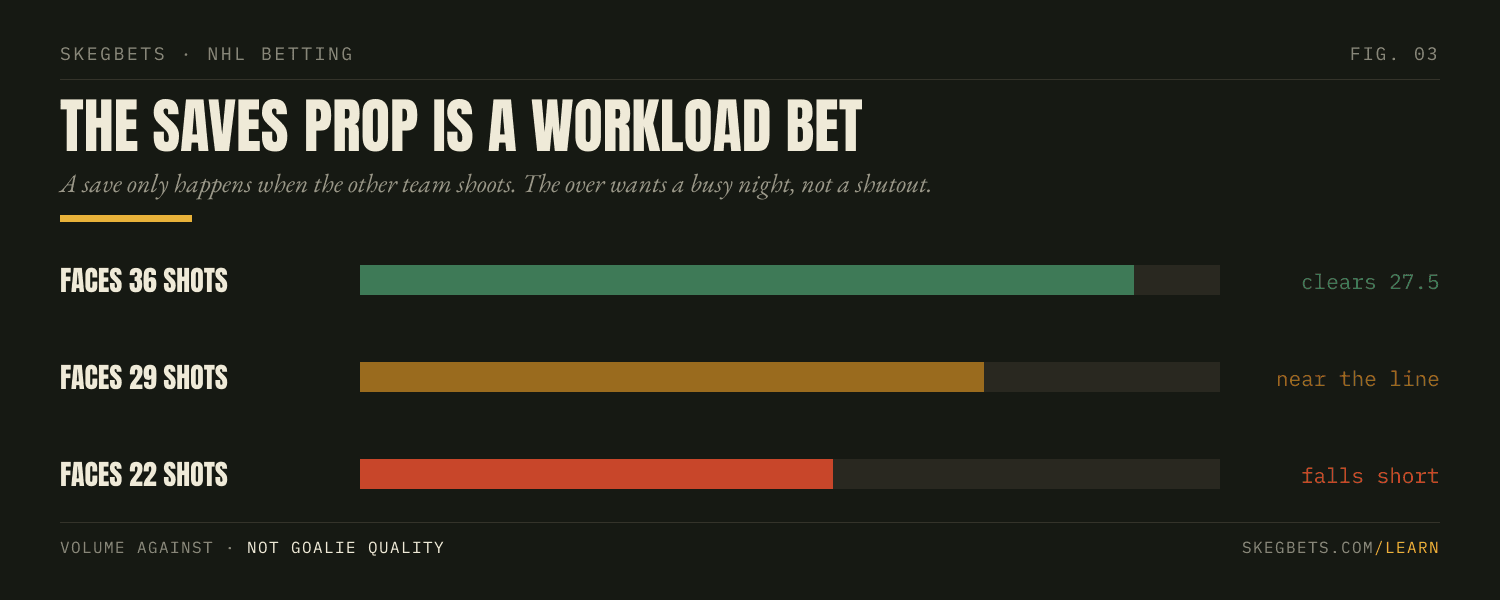
A save only happens when the other team shoots, so the saves prop rewards volume against, not quality. A capable goalie on a team that gives up shots, or one facing a high-event offense, clears the line; an elite goalie shielded by a tight defense can fall short of a modest number. When you bet saves, you are really betting on how much rubber the goalie sees.
Reading a prop
Start with ice time and role, because a top-line, top-power-play skater simply gets more chances than the line implies for a depth player. Layer in pace and the specific matchup, estimate the number yourself, then convert the prop price with the implied probability tool and bet only when your number beats it. That gap is expected value.
| Prop | What it really measures | The over wants |
|---|---|---|
| Shots on goal | Shooting volume x pace x matchup | Volume shooter, fast game |
| Points | Ice time + linemates + PP role | Top line, top unit |
| Goal scorer | Shots + role + matchup | Chances, not just stars |
| Goalie saves | Shots faced (workload) | Busy night, not a shutout |
Frequently asked questions
What is the most popular NHL prop?+
The anytime goal scorer, a yes/no on whether a player scores at all. It is simple to read and pays plus money on all but the biggest stars. It is really a stack of shooting volume, ice time, power-play role, and the matchup, not just a famous name.
What is a shots on goal (SOG) prop?+
A bet on how many shots a skater puts on net, over or under a line like 2.5 or 3.5. It rewards volume shooters and power-play quarterbacks, and it scales with pace and with how many shots the opponent allows. It is one of the steadier props because shots are more frequent and less random than goals.
Why does the saves prop favor a worse team?+
Because saves are a workload stat, not a quality stat. A goalie only racks up saves if his team lets the other side shoot. A strong goalie on a leaky team, or facing a high-event opponent, sees more rubber and clears the saves line more easily than an elite goalie protected by a stingy defense.
How do I find value in hockey props?+
Start with ice time and role, since a top-line, power-play skater simply gets more chances. Layer in pace and the specific matchup, then compare your estimate to the line. The general method is the same across sports, covered in our player prop betting strategy guide.
For the full picture, start with how to bet on hockey, learn the metrics in how to read hockey stats, and see the props we take in our live feed.
Free tools