Hockey is a low-scoring, high-variance sport, which sounds like a warning and is really an invitation. Goals are scarce, one player in net shapes the whole game, and the schedule grinds teams down in ways the line is slow to price. Learn where to look and the edges sit in plain sight.
The bets you’ll make
The NHL board runs deep, yet five markets account for nearly every bet worth making. Understand how each is priced and the rest of the screen falls into place.
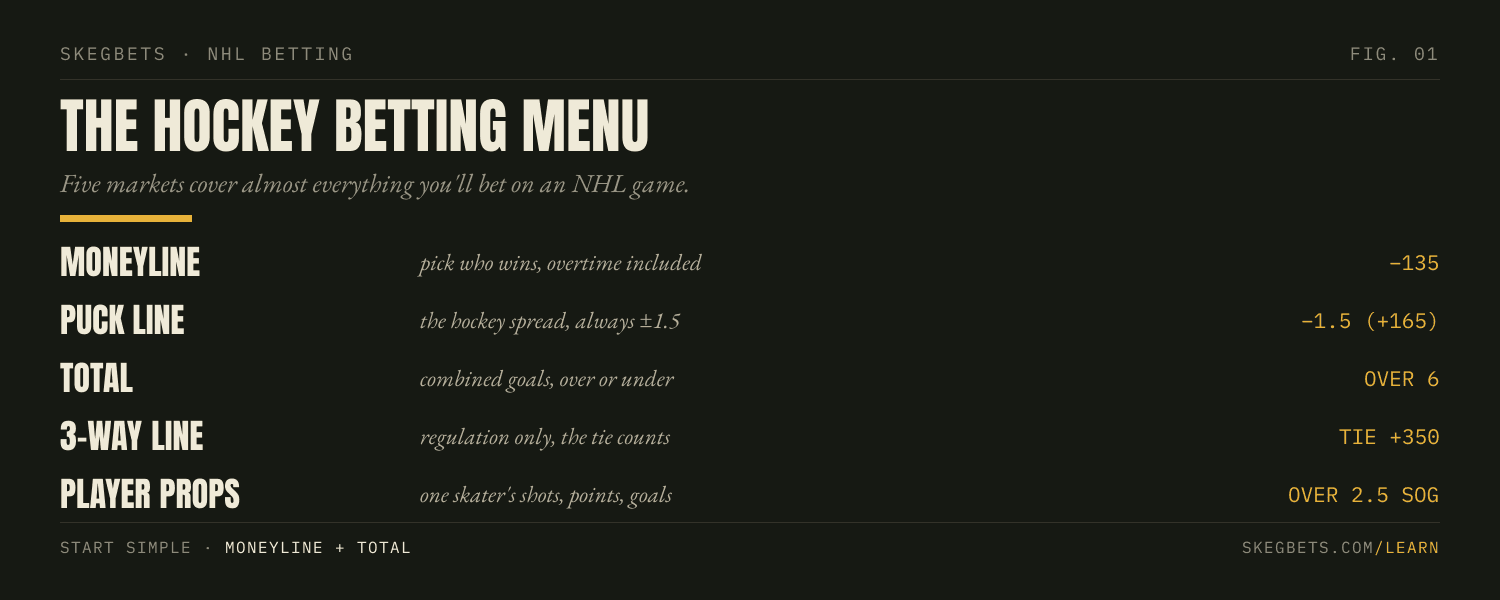
The moneyline is a straight bet on who wins, overtime included. The puck line is hockey’s spread, fixed at 1.5 goals. The total is the combined goals over or under a line. The 3-way line prices regulation only, with the tie as its own outcome. And player props bet one skater’s shots, points, or goals. If betting itself is new, the general how to bet on sports guide covers odds and bankroll first.
The goalie is the whole game
Hockey is the rare sport where one player touches nearly every scoring chance against his team. The starting goalie faces 25 to 35 shots a night, and the gap between an elite starter and a backup is worth a meaningful slice of a game that often turns on a single goal. Change the name in the crease and the whole number has to move with it.
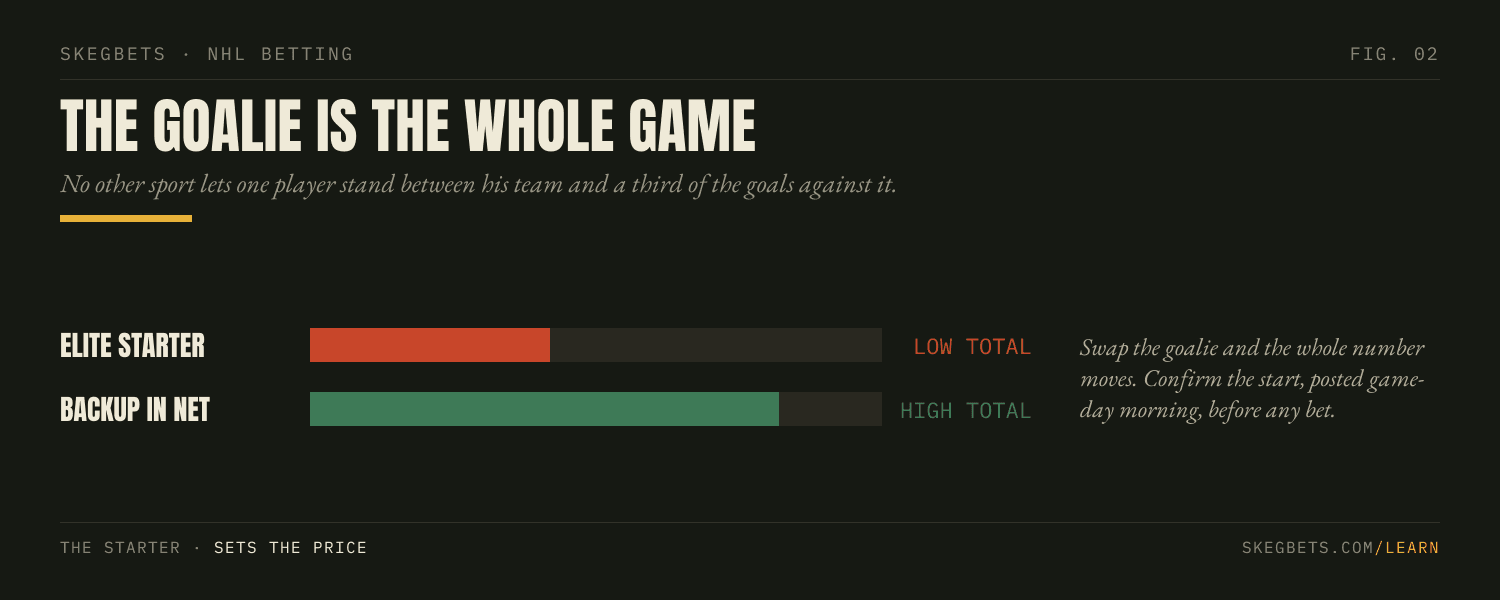
Swap a Vezina-level starter for a backup making his fourth appearance and the total can move half a goal and the moneyline can shift twenty cents. That’s why the confirmed starting goalie, posted the morning of the game, comes before any hockey bet, and why timing your bet around that confirmation matters. The goalie is enough of a lever that it gets its own guide: goalies and betting.
What moves a hockey number
The goalie aside, three other forces set every line. Read one of them ahead of the books and you are betting into a number that has not caught up yet.
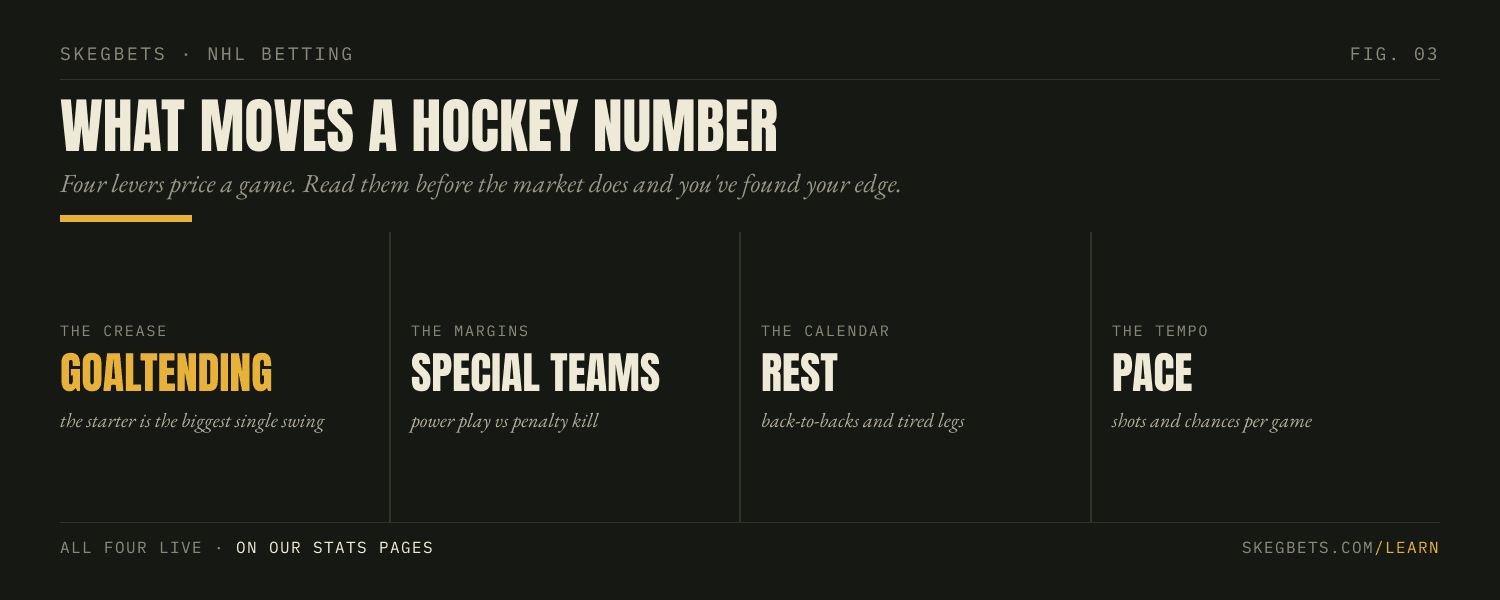
Special teams decide the margins: a power play that clicks and a penalty kill that holds are worth real goals over a game. Rest and schedule grind teams down, and the second night of a back-to-back is the classic soft spot. And pace, how many shots and chances a matchup generates, sets the run environment the way a ballpark does in baseball. These levers, plus goaltending, are what betting NHL totals and situational angles break down, and they live on our NHL stats pages.
Read the stats, not the standings
Points in the standings hide a lot of noise. Bounces, empty-net goals, and shootout luck inflate some teams and bury others, and none of it forecasts the next game. Expected goals, shot-attempt share, and a goalie’s saves above expected do the forecasting, and they are the numbers a sharp hockey bettor reads. That’s its own subject, covered in how to read hockey stats, and every number it teaches is on our team and player pages.
Where to start
Begin on the moneyline and the total in a game you’re watching, with the starting goalies confirmed in front of you. Add the puck line once you have a feel for one-goal games, and props once you’re reading matchups. Convert any price to a percentage with the odds converter, and see the bets we’re making, with the price and the read, in our live feed.
| Market | What you're betting | Best for |
|---|---|---|
| Moneyline | Who wins, overtime included | Beginners |
| Puck line | Win by 2+, or +1.5 cushion | Lopsided or tight games |
| Total | Combined goals, over/under | Goalies + pace + special teams |
| 3-way line | Regulation only, tie included | Pricing the 60-minute game |
| Player props | One skater's shots, points, goals | Matchup readers |
Frequently asked questions
What is the best bet type for hockey beginners?+
The moneyline and the total. The moneyline is a straight bet on who wins, including overtime, and the total is the combined goals over or under a line. Both are simple to read, and together they teach you how an NHL number is built before you add the puck line or props.
Why does the starting goalie matter so much in NHL betting?+
Because no other player in any sport faces a higher share of his team's outcomes alone. A starter and a backup can be a goal apart in expected goals against, which moves the moneyline and the total directly. That is why you confirm the starting goalie, posted the morning of the game, before you bet.
What is the puck line in hockey?+
The puck line is hockey's spread, almost always fixed at 1.5 goals. The favorite is laid at −1.5 and the underdog gets +1.5. Because hockey is low-scoring and a third of games are decided by one goal, laying the favorite to win by two turns a pricey moneyline into plus money.
Do rest and back-to-backs really matter in hockey betting?+
Yes. A team on the second night of a back-to-back is often on its backup goalie and a step slow, and the market does not always move the full amount. Rest, travel, and schedule spots are public information you can read before the line fully accounts for them.
Go deeper on the markets: the puck line, totals, player props, goalies, and reading the stats.
Free tools