Basketball is the most star-driven sport on the board, and that is the whole opportunity. One player carries a huge share of his team, the schedule is relentless, and the news that moves a line, who is sitting tonight, is public hours before tip. Learn where to look and the edges show up before the market catches them.
The bets you’ll make
An NBA slate offers a long list of bets, but five markets do most of the work. Once you can read these five, nothing else on the board is a mystery.
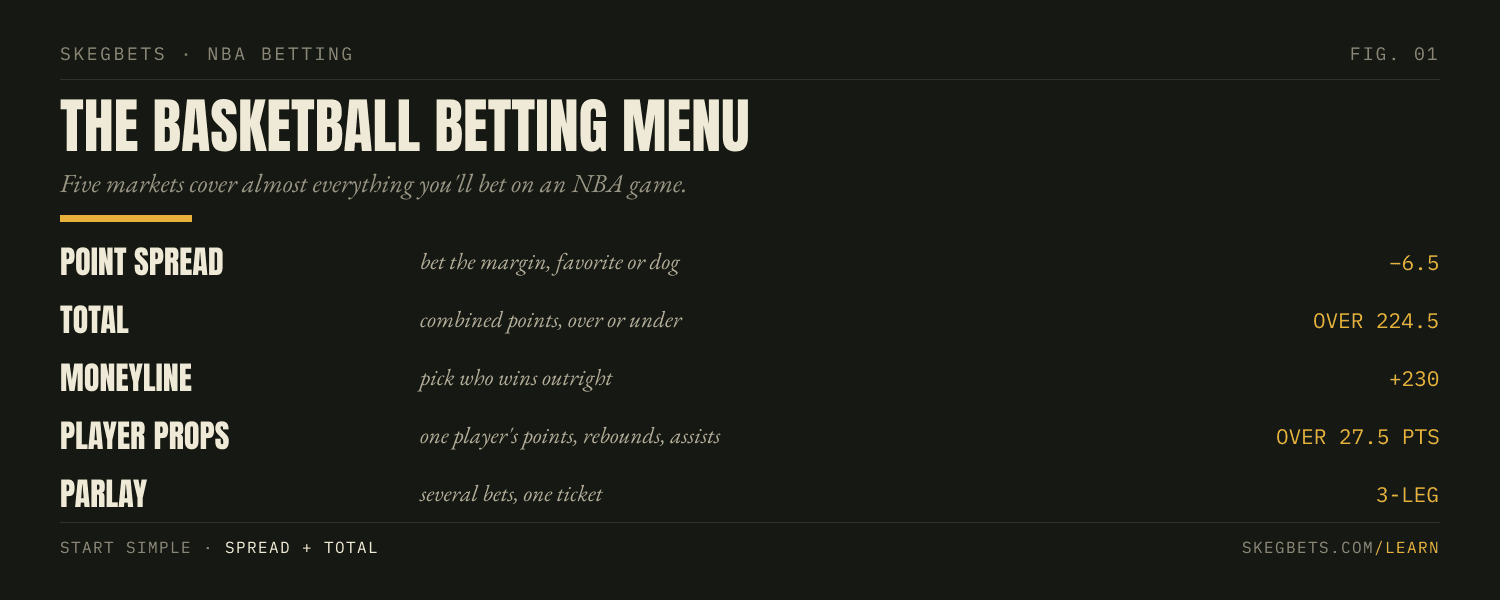
The point spread handicaps the favorite so both sides pay about the same. The total is the combined points over or under a line. The moneyline is a straight bet on who wins. Player props bet one player’s points, rebounds, or assists. And parlays tie several together. If betting itself is new, the general how to bet on sports guide covers odds and bankroll first.
Who’s playing is the bet
A basketball roster runs eight or nine deep, but a single star can account for a third of his team’s scoring and shot creation. Rule him out and the spread lurches several points before anything else about the game has changed. No other sport concentrates that much value in one name on the injury report.
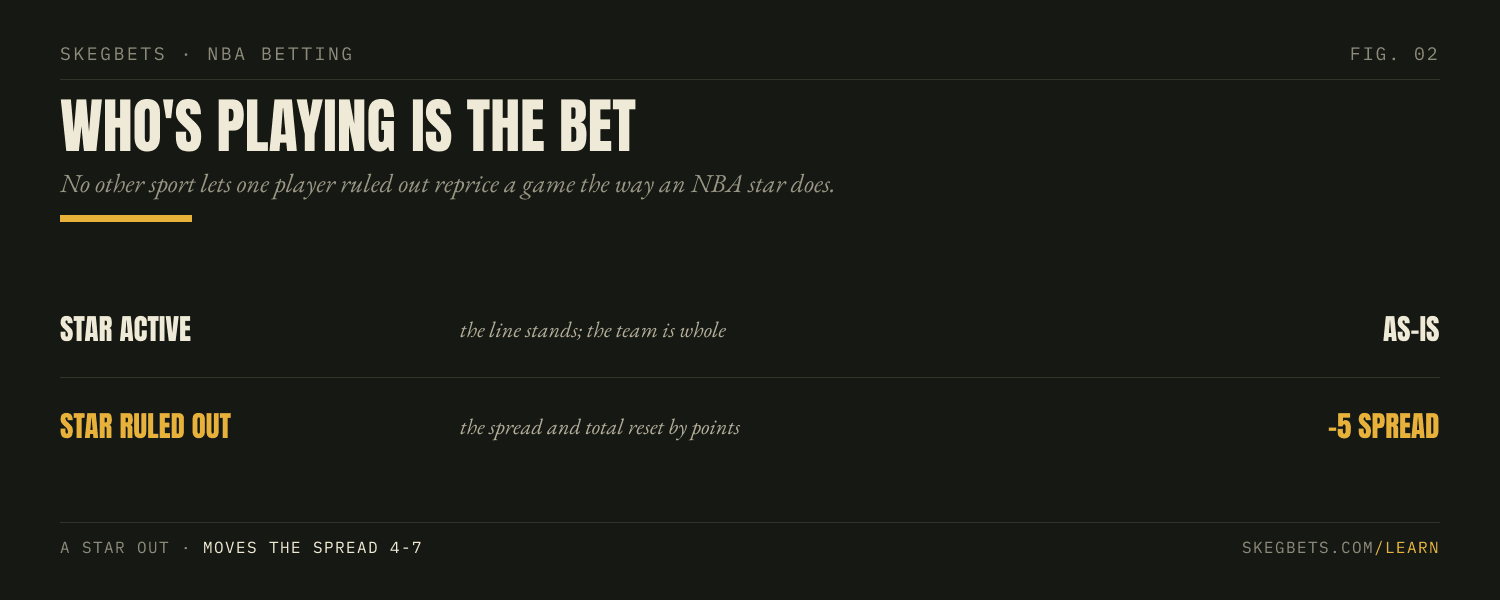
A top player ruled out can move a spread 4 to 7 points, and the total with it. Teams now rest stars on purpose, called load management, and a late scratch can hit minutes before tip. That is why the confirmed inactives, and the meaning of a “questionable” tag, come before any NBA bet. It is enough of a lever that it gets its own guide: load management and injuries.
What moves a basketball number
Once the lineups are set, three more inputs do the pricing. Spot one drifting before the books finish accounting for it and that gap is yours to take.
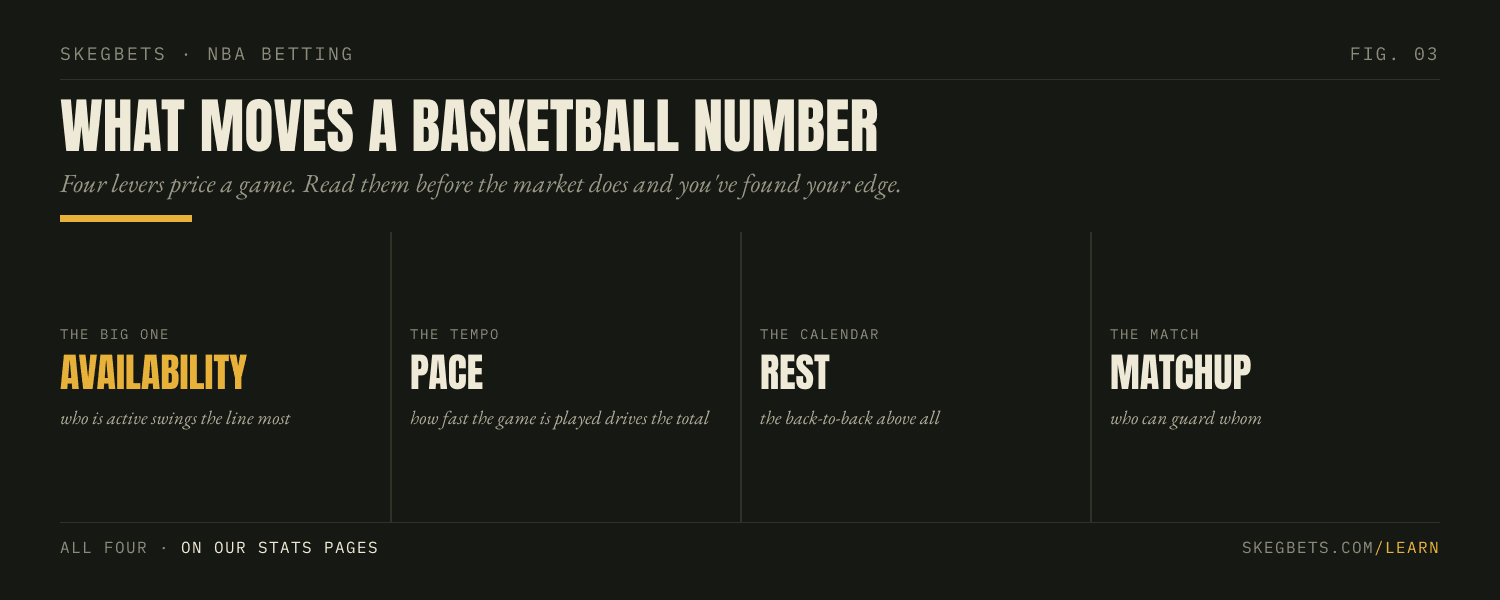
Pace, how fast a matchup is played, sets how many points are on offer and drives the total. Rest and the schedule, the back-to-back above all, wear teams down and trigger rest. And the matchup, who can guard whom and which way the speed mismatch runs, decides the margins. Rest and pace spots get their own breakdown in situational angles, and the team and player numbers behind them are on our NBA stats pages.
Read the stats, not the record
Standings are a poor guide to tonight. A team’s win column is shaped by clutch-game luck and hot shooting nights that will not repeat. What actually carries forward is efficiency: points scored and allowed per 100 possessions and the pace behind them, the numbers a sharp basketball bettor reads. That’s its own subject, covered in how to read basketball stats, and every number it teaches is on our player pages.
Where to start
Begin on the spread and the total in a game you’re watching, with the injury report confirmed. Add the moneyline on live underdogs, and props once you’re reading minutes and matchups. Convert any price to a percentage with the odds converter, and see the bets we’re making, with the price and the read, in our live feed.
| Market | What you're betting | Best for |
|---|---|---|
| Point spread | The margin, favorite or dog | Beginners |
| Total | Combined points, over/under | Pace readers |
| Moneyline | Who wins outright | Live underdogs |
| Player props | One player's points, reb, ast | Minutes + matchup |
| Parlay | Several bets, one ticket | Correlated angles |
Frequently asked questions
What is the best bet type for basketball beginners?+
The point spread and the total. The spread handicaps the favorite so both sides pay around the same, and the total is the combined points over or under a line. Both are simple to read, and together they teach you how an NBA number is built before you add props or parlays.
Why does player availability matter so much in NBA betting?+
Because one star is a huge share of his team. A top player ruled out can move a spread 4 to 7 points by himself, far more than any single player moves a line in baseball or hockey. That is why you confirm who is active, posted before tip-off, before you bet an NBA game.
What is the spread in basketball?+
A handicap on the margin. A favorite laid at −6.5 must win by seven or more to cover, and a +6.5 underdog cashes if it wins or loses by six or fewer. Because basketball is high-scoring, NBA spreads are wider than football and the key numbers matter far less.
Do back-to-backs matter in NBA betting?+
Yes. A team on the second night of a back-to-back is more tired and more likely to rest a player, and a team deep in a stretch of games in few nights wears down late. The schedule is a real edge once you know which spots produce flat efforts.
Go deeper on the markets: the point spread, totals, player props, load management, and reading the stats.
Free tools