A basketball total has the cleanest underlying math of any bet on the board. It is two numbers multiplied: how many possessions the game will run, and how many points each team gets out of them. Read both and the over/under stops being a guess.
Pace times efficiency
Every NBA total is really a small calculation. Get the two inputs right and you can build the number yourself.
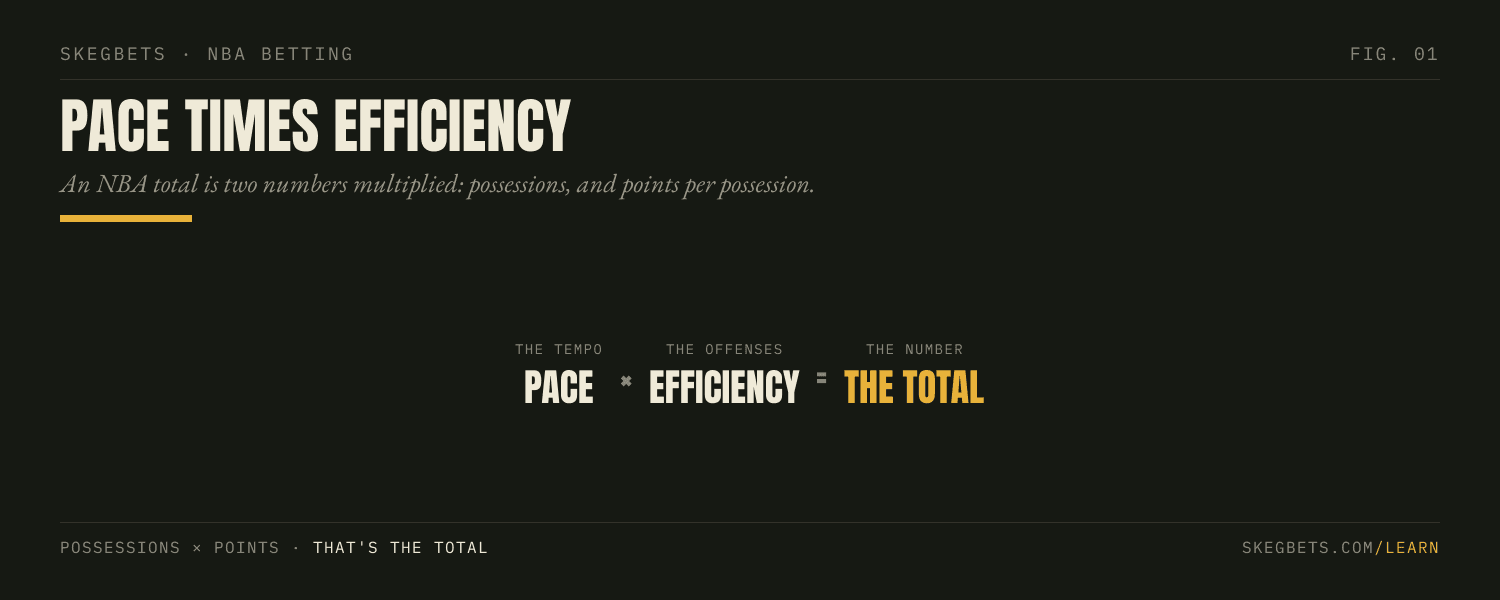
Pace, the number of possessions, multiplied by efficiency, the points each team scores per possession, gives the total. A fast team meeting a leaky defense stacks both inputs high; two slow, stingy teams pull both down. The pace and efficiency figures for every team are on our NBA stats pages.
Pace is the engine
Of the two inputs, pace is the one the market is slowest to fully price, because a single fast team drags the whole game with it.

A team that pushes the ball, shoots early, and forces turnovers can drag a slower opponent into a faster game than its own average, which lifts the total beyond what either team’s number suggests. The reverse is just as real: a deliberate, half-court team can choke the pace out of a track meet. Identify which side controls the tempo and you have the most important read on the total.
What swings it late
Two forces decide whether a total that looked right at tip actually lands.
Three-point shooting is the night-to-night wild card: a hot or cold shooting night moves the score more than any matchup edge, which is why no single total is ever a lock. Game flow does the rest. A blowout empties the benches and cools the scoring, and a team on the back end of a back-to-back often shoots worse on tired legs, both gentle pulls toward the under.
Reading a total
Name the team that dictates tempo, multiply its possessions by both efficiencies, then shave for rest or a missing starter. That gives you a projected number, and when it lands a few points off the board, the odds converter turns the over and under prices into probabilities so you can take whichever side the market has mispriced. Doing that with discipline is expected value, and the pace and shooting numbers it leans on live in how to read basketball stats.
| Lever | What it does | Pushes the total |
|---|---|---|
| Pace | Possessions per game | Fast over, slow under |
| Efficiency | Points per possession | Strong over, weak under |
| 3-pt shooting | Hot or cold from deep | The nightly wild card |
| Rest | Tired legs shoot worse | Under |
| Blowout | Benches empty late | Under |
Frequently asked questions
What is a typical NBA total?+
Most NBA totals sit between about 215 and 235 points. Two fast, high-powered offenses push it toward the 240s; two slow, defensive teams pull it into the low 210s. Pace and shooting efficiency do almost all of the work.
What is pace in NBA betting?+
The number of possessions a game produces, usually expressed per 48 minutes. A fast team that pushes the ball and shoots early creates more possessions, and more possessions mean more chances to score, which lifts the total. A slow, half-court team does the reverse.
Why is an NBA total pace times efficiency?+
Because points equal chances times how well you use them. Pace sets the number of possessions, and offensive efficiency, points scored per 100 possessions, sets how many points each one produces. Multiply the expected possessions by both teams' efficiency and you have the total, before adjustments.
Do blowouts and rest affect NBA totals?+
Some. A blowout empties the benches, which can cool the scoring late, and a team on the second night of a back-to-back often shoots worse on tired legs. Both nudge toward the under, though shooting variance from three is the bigger swing on any given night.
For the full picture, start with how to bet on basketball, read the rest-and-schedule spots in situational angles, and see the totals we take in our live feed.
Free tools