A baseball total looks like one number, but it’s really three questions stacked on top of each other: who’s pitching, where they’re playing, and what the sky is doing. Read those three before the market fully prices them and you’ve found the edge.
Three levers on a total
The total (the over/under) is a bet on the combined runs both teams score, and it ignores who wins. What it doesn’t ignore is the run environment, and three things set that.

For the general idea of an over/under, see bet types explained. In baseball specifically, the levers are the starting pitchers, the ballpark, and the weather, roughly in that order of impact.
Start with the pitching
The two starters bound how many runs a game can produce, which is why they’re the first thing to look at and why you wait for them to be confirmed. Two aces squeeze a total toward the low single digits; two back-end arms shove it the other way. But the surface ERA can mislead, so read the underlying skill, the strikeout and walk rates and FIP covered in how to read baseball stats, rather than the results. A pitcher whose ERA sits well under his FIP is a candidate to give up more runs than his total implies. Because the starter matters so much, timing the bet around confirmed lineups is part of the play.
The park moves the number
Where a game is played changes how many runs it’s worth before a single pitch. Ballparks aren’t neutral, and the gap between the extremes is large.
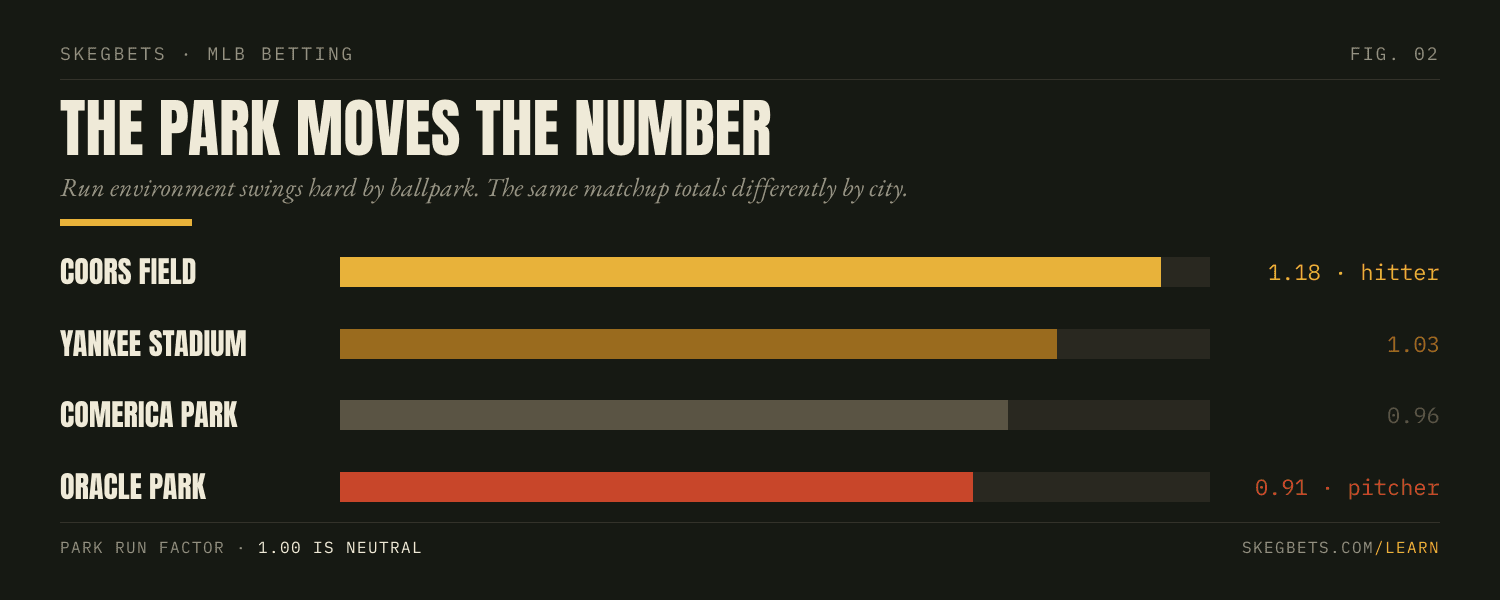
A park run factor above 1.00 inflates scoring; below it suppresses it. The same two teams and pitchers will total very differently at altitude in Denver than in a cavernous pitcher’s park by the bay. The books bake the park into the line, but they don’t always weight it the way the matchup deserves, especially once weather is layered on. Every park’s factor, and each pitcher’s form behind it, is on our MLB stats pages.
Wind and air
The last lever is the one casual bettors skip: the weather. In a game decided by inches at the wall, the air does real work.

Wind blowing out and warm, thin air let fly balls carry, which pushes a total up. Wind blowing in and cold, heavy air hold them in the yard, pulling it down. A 15-mph wind straight out to center is one of the cleaner edges in baseball, because it’s public information that doesn’t always move the number enough. Read the three levers together, and you’ll see totals the market priced on autopilot.
| Lever | Pushes the total up when | Down when |
|---|---|---|
| Starting pitchers | Weak or tired arms | Two aces |
| Ballpark | Hitter's park (factor >1) | Pitcher's park (<1) |
| Weather | Wind out, warm air | Wind in, cold air |
Frequently asked questions
What is a total in MLB betting?+
A total, or over/under, is a bet on the two teams' combined runs, not on who wins. The book posts a number, usually around 7 to 10 runs, and you bet whether the game lands over or under it. Most MLB totals use a half-run so there is no push.
What moves an MLB total the most?+
The starting pitchers, by far. Two aces produce a low total; two weak starters push it up. After the arms, the ballpark and the weather do the most work, since they change how easily fly balls turn into runs.
Do weather and wind really affect baseball totals?+
Yes. Wind blowing out and warm, thin air help fly balls carry, nudging a total up. Wind blowing in and cold, heavy air hold them in the park, pulling it down. In a sport decided by inches at the wall, a strong wind is a real edge on the total.
Should I wait for confirmed starting pitchers before betting a total?+
Almost always. The starter is the biggest single input, so a total posted before the matchup is confirmed carries real risk. Most sharp baseball bettors wait for confirmed pitchers before touching a total or a moneyline.
For the full picture, start with how to bet on baseball, learn the pitching numbers in how to read baseball stats, and see our totals in the live feed.
Free tools