A tennis ace prop is not a bet on a famous serve. It is a bet on power times surface times the returner across the net, and two of those three change every week as the tour moves between hard, clay, and grass. The same is true of double faults, total games, and the tiebreak markets. Read the inputs and the prop board stops looking like a list of names.
The prop markets
A single match can post a dozen props, but a handful cover nearly every ticket worth making. Each one is simpler than its name once you see what feeds it.
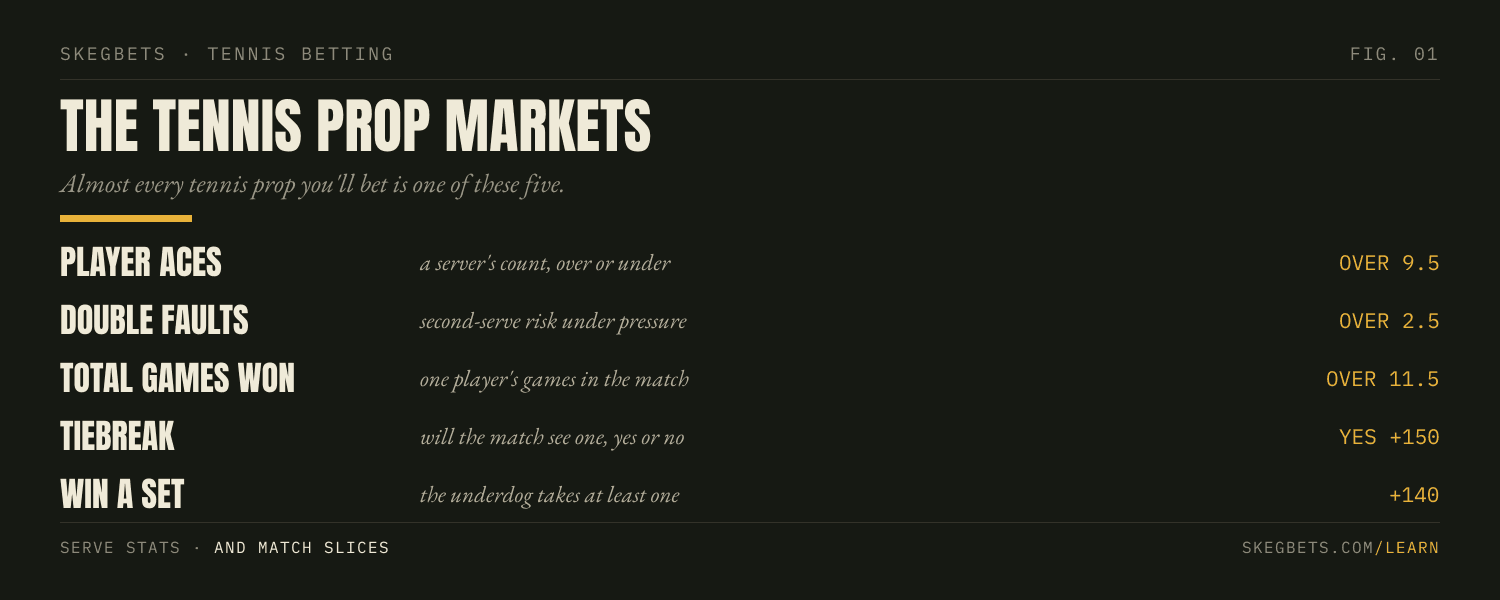
Player aces over/under bets how many unreturned serves a player lands. Double faults over/under bets the misses, which climb under pressure and with a riskier second serve. Total games won by a player and total games in the match bet volume rather than the winner, which makes them serve-and-surface reads more than form reads. Tiebreak yes/no bets whether any set reaches 6-6, and player to win a set lets you back an underdog to take one without taking the match. Some books add fastest serve, a niche line tied straight to raw speed. If betting itself is new, start with how to bet on tennis.
Reading an ace prop
The ace prop is the one people misread most often, because the instinct is to look only at the server. The server is one of three factors, and on any given week is not even the one that moved.
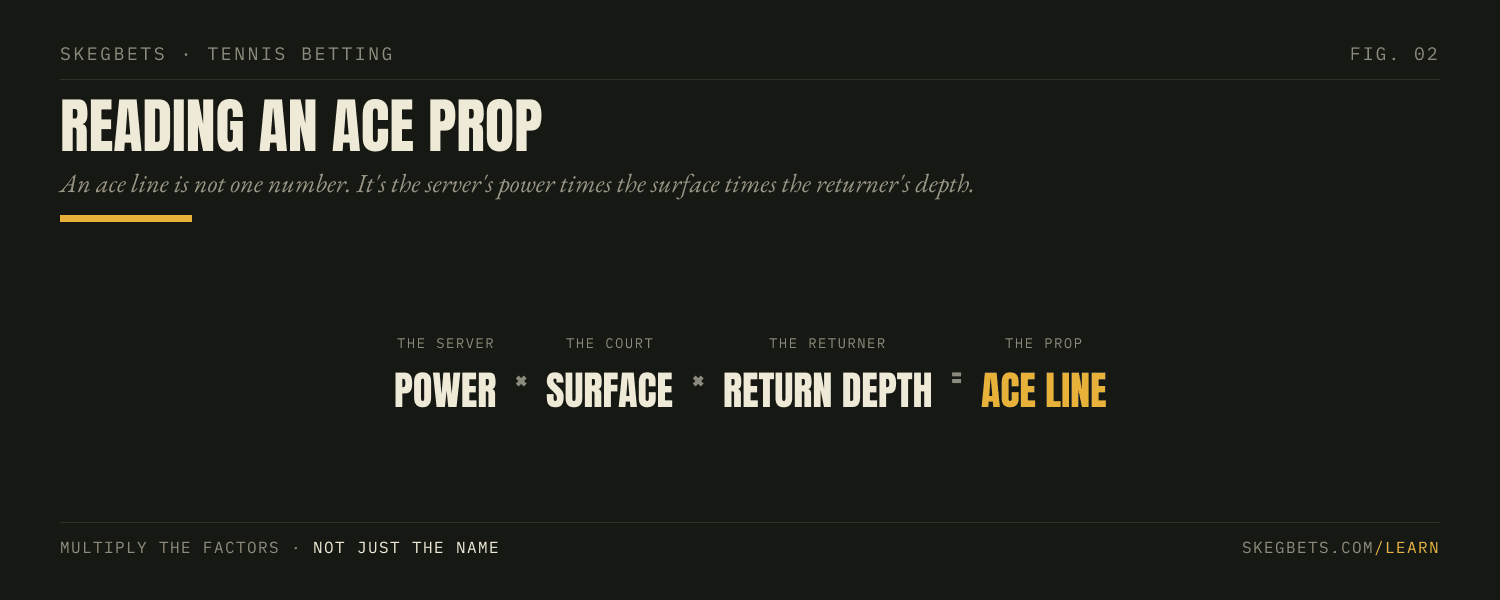
Take the server’s power and first-serve percentage, multiply by the surface, then adjust for the returner. Grass and fast hard courts inflate aces by rushing the returner; slow clay deflates them by handing the returner an extra beat to read and reach the ball. A returner who stands deep and chips serves back pulls the number down further. So the same 130 mph server is a clean over on grass against a deep-standing returner and a live under on clay against a returner who blocks first serves back. Tie the line to the surface before anything else, then to the two players. The serve and return splits that price all of this sit on our tennis stats pages.
Props that move together
Tennis props look independent on the screen and rarely are. They all descend from the same match result, so backing several of them at once is often the same bet wearing different jerseys.
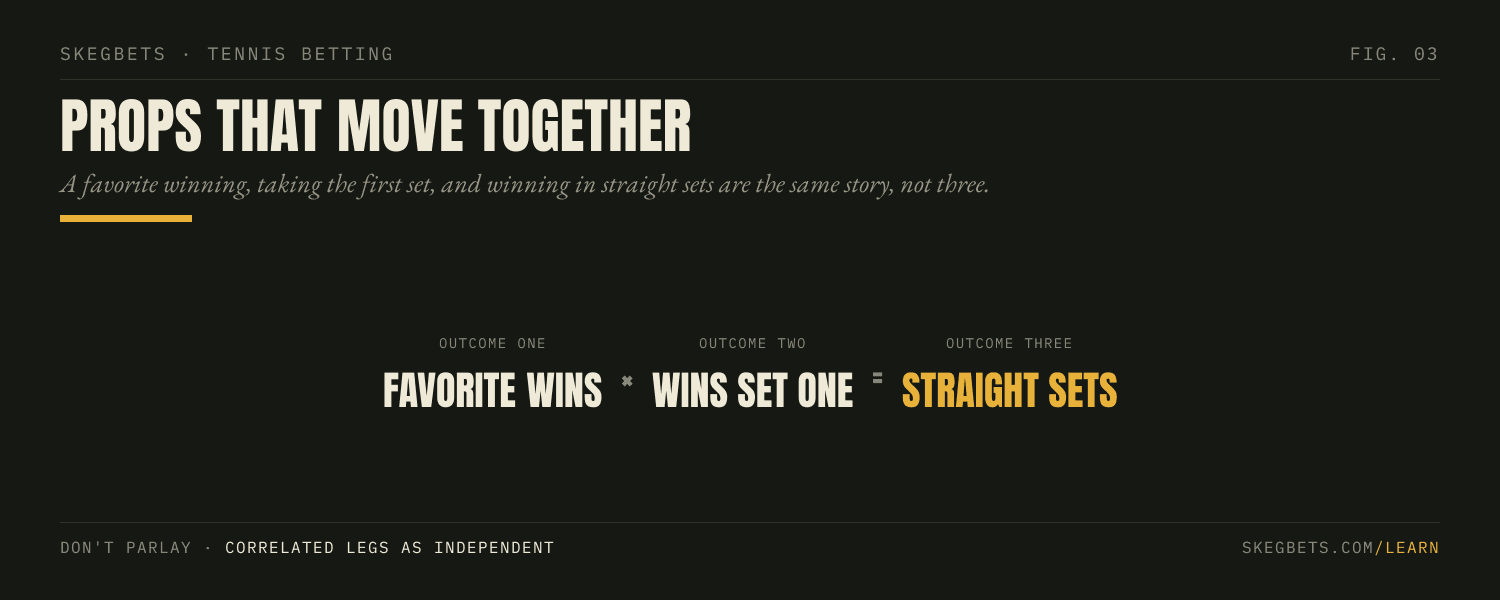
A favorite winning the match, winning the first set, and winning in straight sets are three windows onto one outcome. When the favorite is good, all three hit together; when she stumbles, they miss together. Parlay them as if each were a separate coin flip and you overstate your true odds badly, which is exactly why a book prices that combined ticket close to its single most likely leg, not the product of all three. The general version of this trap, and how to read correlation across any sport, is in player prop betting strategy. Correlation can also work for you: a same-game bundle a book misprices low is a real edge, just not the free money a naive parlay slip implies.
Finding the edge
The edge in tennis props is a serve-and-surface mismatch the line is slow to reprice. A heavy server arriving on grass, a low-ace server drawn into a slow-clay grind, a returner who eats first serves meeting a one- dimensional bomber: in each case the ace and total-games numbers lag the matchup for a day or two. Read the per-surface serve and return splits in how to read tennis stats, weight the surface as heavily as the names with tennis surface betting, and pull the same splits yourself from our tennis stats pages. Size each ticket with the prop research tool, then compare what we are actually backing, with the price and the read, in our live feed.
| Prop | What you're betting | Driven by |
|---|---|---|
| Player aces | Unreturned serves, over/under | Server power x surface x returner |
| Double faults | Service misses, over/under | Pressure + second-serve risk |
| Total games | A player's games won | Hold rate x surface speed |
| Tiebreak y/n | Does any set reach 6-6 | Two big servers, even hold |
| Win a set | Underdog takes one set | Serve floor + surface fit |
Frequently asked questions
What tennis player props can I bet?+
The common ones are player aces over/under, double faults over/under, total games won by a player, total games in the match, tiebreak yes/no, and a player to win a set. Some books also post fastest serve. Aces and total games are the most liquid, so they carry the tightest lines and the steadiest data behind them.
What drives a tennis ace prop?+
Three things, multiplied. The server's raw power and first-serve percentage set the ceiling, the surface scales it up or down, and the returner's depth and quality pulls it back. A big server on grass against a returner who stands deep is the cleanest over there is; the same server on slow clay against a returner who chips back deep is a different number entirely.
Why are tennis props correlated?+
Because they all flow from the same match result. A favorite winning, winning the first set, and winning in straight sets are three views of one outcome, so they rise and fall together. Stacking them in a parlay as if they were independent overstates your true odds. Books price the combined ticket close to the single most likely leg, not the product of all three.
Do clay courts lower ace props?+
Yes. Clay is slow and high-bouncing, which gives the returner an extra beat to read and reach the serve, so aces fall on clay for almost every server. Fast hard courts and grass do the opposite. Tie any ace line to the surface first, then to the specific server and returner, and you will catch the lines that lag a venue change.
For the full picture, start with how to bet on tennis, weight the court in surface betting, learn the metrics in how to read tennis stats, and see the props we take in our live feed.
Free tools