The short version
Soccer's markets, from 1X2 to Asian handicap, why the draw sits near 25%, and the five levers that move every goal line. The starting point for soccer betting.
Soccer prices the tie as a real result, and that one difference reshapes every market on the board. Scoring is rare, roughly 2.7 goals a game, so a single goal swings a match and a quarter of them end level. Learn how the markets price that and the board opens up.
The bets you’ll make
A soccer card runs across dozens of leagues and a deep wall of options, but six markets carry almost every bet you’ll place. Get a feel for how each one prices and the rest of the board reads itself.
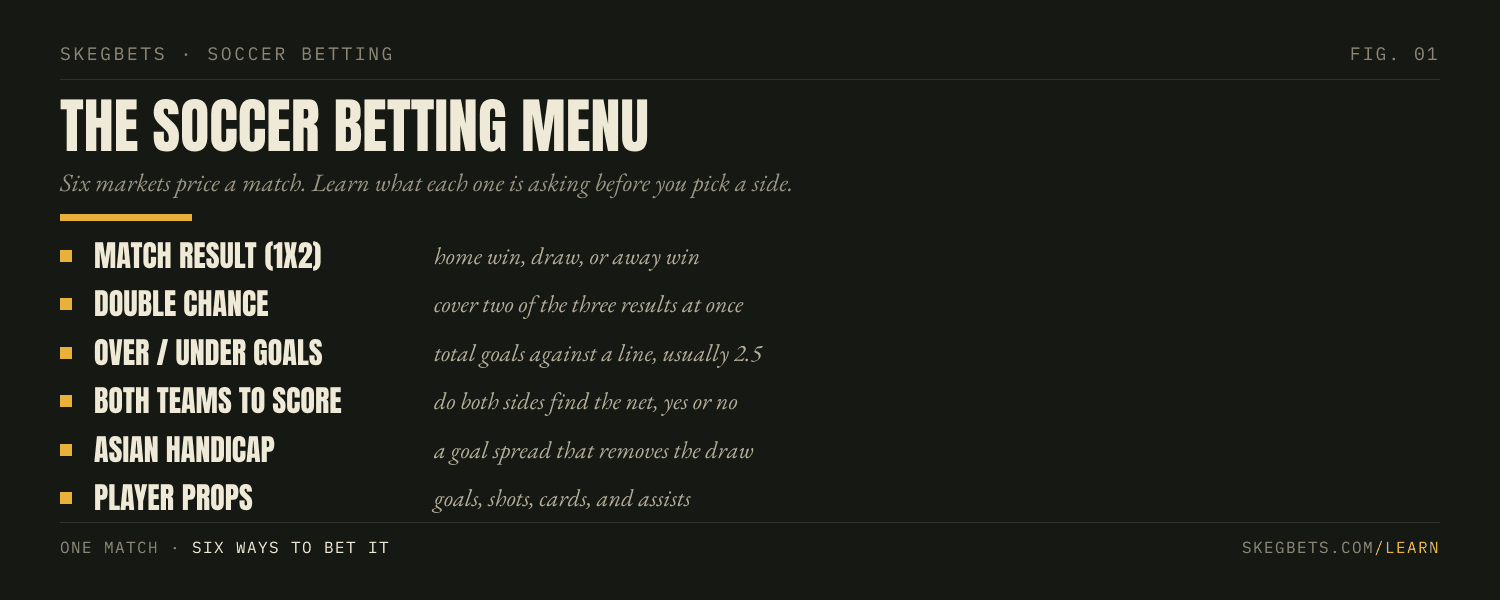
The match result (1X2) is the core bet: home win, draw, or away win, priced as three outcomes. Double chance collapses that to two of the three results for a shorter price. Over-under goals bets the combined total against a line, usually 2.5. Both teams to score is a clean yes or no on whether each side finds the net. The Asian handicap is a goal spread that removes the draw entirely, and player props bet one player’s goals, shots, or cards. If betting itself is new, the general how to bet on sports guide covers odds and bankroll first.
| Market | What you're betting | |
|---|---|---|
| Match result (1X2) | home, draw, or away | Core |
| Double chance | two of the three results | Beginner-safe |
| Over-under goals | total goals vs a line, usually 2.5 | Scoring read |
| Both teams to score | yes or no | Both attacks |
| Asian handicap | a goal spread with no draw | Two-way value |
| Player props | goals, shots, cards | Matchup readers |
Goals are the whole game
A soccer match hangs on a handful of goals, so a single one bends every market at once. Score first and your win probability jumps, your total pushes toward the over, and both-teams-to-score tilts yes. Because the events are so scarce, the read that matters is not who scored last week but who is creating and conceding real chances, which is what expected goals measures.
A team scoring above its xG is riding finishing luck that usually fades; a team out-creating its scoreline is usually about to be repaid. Read the xG under the results and you catch those corrections a week before the table does, which is where both soccer totals and the both teams to score market earn their keep.
One match, three results
Every bet on the outright winner in soccer competes against a third result that basketball and football never have to price. Around a quarter of top league matches end level, a standing possibility on every line rather than a rarity. That is why the moneyline in soccer is a three-way market, and why two-way products like draw no bet and the Asian handicap exist to hand you your stake back or split the line when the game stays level.
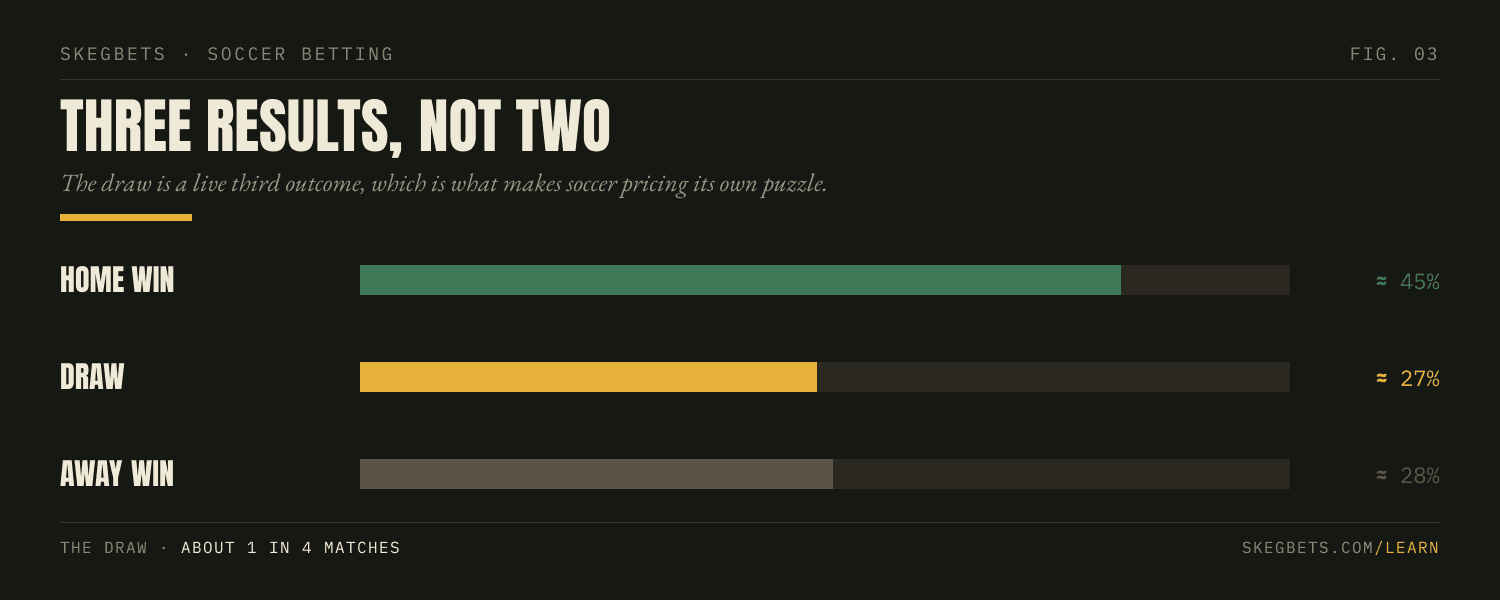
| Result | Three-way (1X2) | Two-way (draw no bet) |
|---|---|---|
| Home win | ~45% | counts |
| Draw | ~27% | stake returned |
| Away win | ~28% | counts |
Those sample numbers are close to the long run split across the major European leagues: home teams win a little under half, the draw sits near a quarter, and the away side takes the rest. On the three-way line, all three prices have to sum to more than 100 percent once the book adds its margin, so the draw is never free. Deciding whether to price it in yourself or bet it away is the first real choice soccer asks of you.
What moves a soccer number
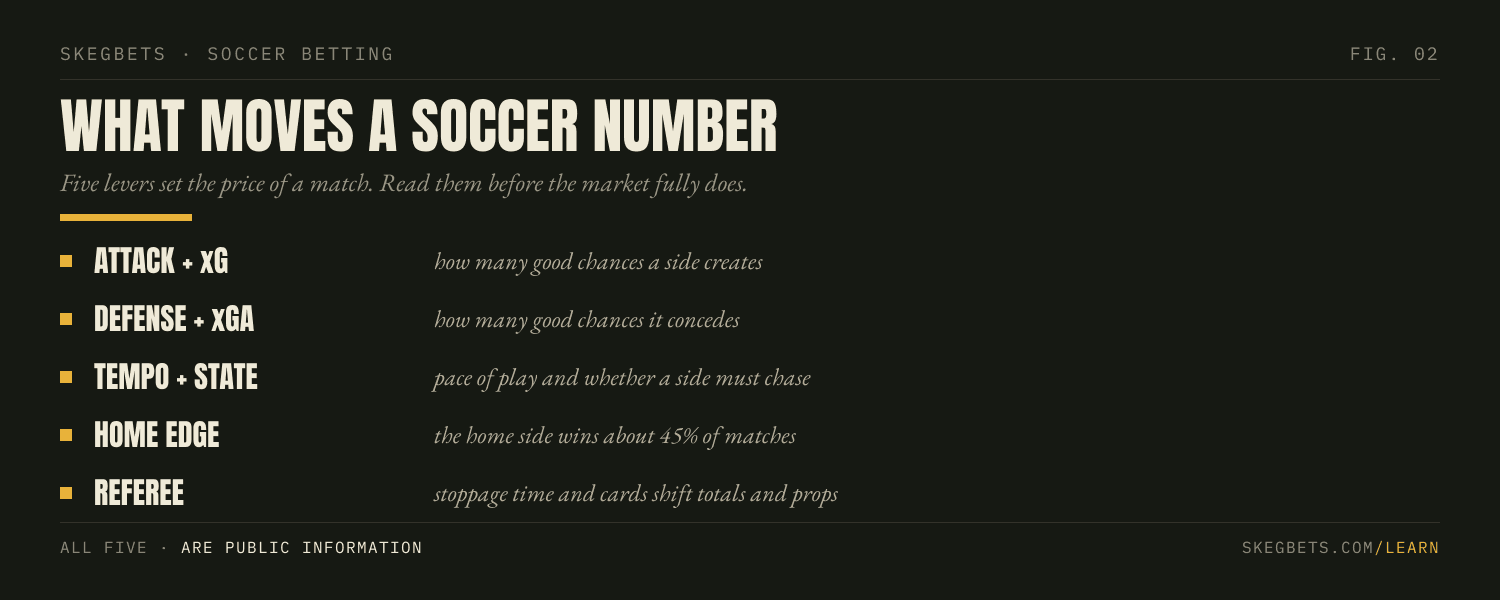
Five inputs finish pricing almost any soccer game. The edge lives in reading one of them earlier than the book re-prices it.
Attacking form and xG set the goals a side should create. Defensive form and xG against set what it should concede, and the keeper sits at the center of that. Match tempo, how open or cagey two styles play, decides whether a game lives over or under its total. Home edge still nudges the result, with home sides winning roughly 45 percent of top league matches against about 28 percent for the away team. And the referee sets the card and stoppage environment, which is the lever behind card props and late goals. All five are the raw material for the deeper market guides: the Asian handicap leans on the result levers, while player props live on the tempo, shot, and card ones.
Where to start
Begin on double chance and over-under goals in a league you actually watch, where you can feel the tempo before you price it. Add the 1X2 line once the draw stops surprising you, then the Asian handicap and draw no bet when you want to trade the tie for a cleaner two-way price. Line up the books in our betting tools, and see the soccer bets we’re making, with the price and the read, on our soccer picks feed.
Frequently asked questions
What does 1X2 mean in soccer betting?+
1X2 is the match result market, and the three symbols are the three outcomes: 1 is a home win, X is a draw, and 2 is an away win. Unlike most US sports, a soccer bet on the outright winner has to account for the tie as a real, priced third result, which is why the market has three prices instead of two.
Why do soccer matches end in a draw so often?+
Because scoring is rare, roughly 2.7 goals per game across the top leagues, so a level scoreline is common. Around a quarter of matches in the major European leagues end drawn. In basketball or baseball, the sheer volume of scoring makes a tie almost impossible, which is why those sports have no draw line and soccer does.
What is xG and should I use it to bet soccer?+
xG, or expected goals, measures the quality of the chances a team created, not the goals it happened to score. A side that outshoots the scoreboard for a few weeks is usually due to regress, and a side that keeps losing on xG is usually running hot. It is the single most useful number for reading whether a team's recent results reflect real performance or luck.
How big is home advantage in soccer?+
Meaningful, though it has shrunk. Home sides win around 45 percent of matches in the top European leagues versus roughly 28 percent for the away team, with the rest drawn. The gap is built into the price, so the edge is not in backing home teams blindly but in spotting when a specific matchup is worth more or less home edge than the market gave it.
What is the safest soccer bet for a beginner?+
Double chance and over-under goals are the gentlest entry points. Double chance lets you cover two of the three results, so you win unless the one outcome you left out lands. Over-under goals is a simple bet on whether the combined total clears a line, usually 2.5, and it teaches you to read a match's scoring environment before you ever touch the harder markets.
Go deeper on the markets: the 1X2 line, draw no bet, both teams to score, the Asian handicap, totals, and player props.
Free tools